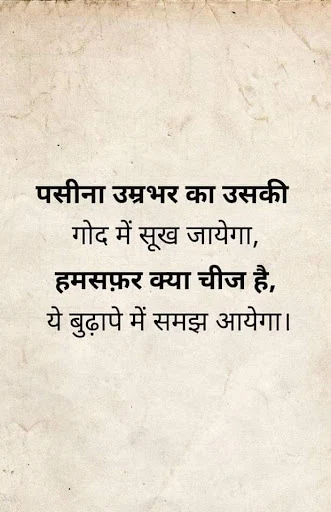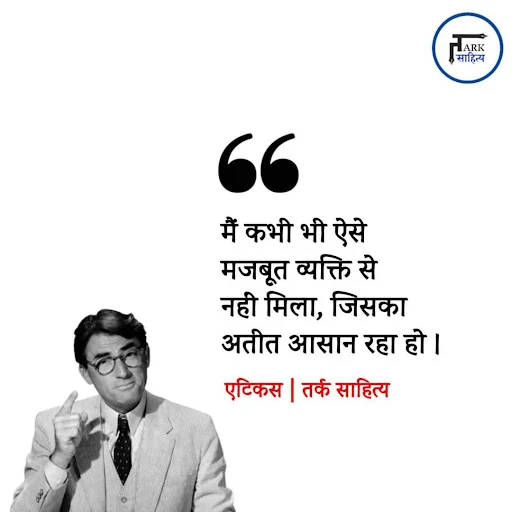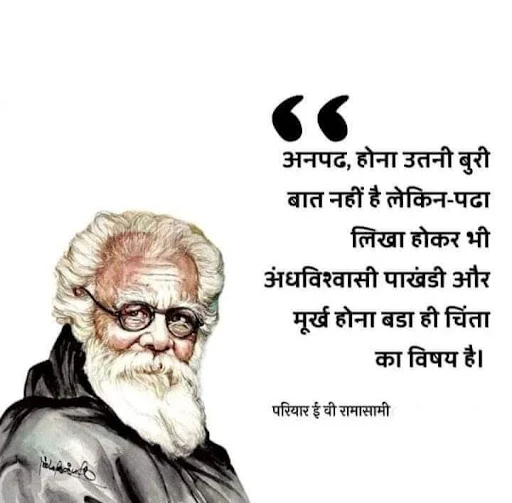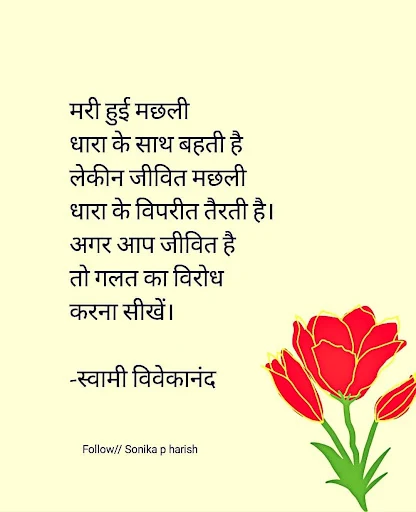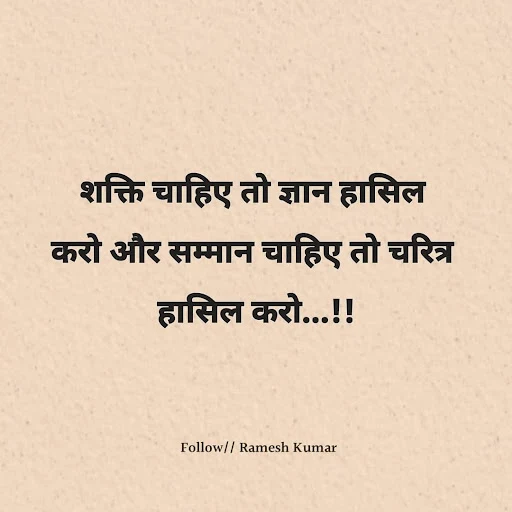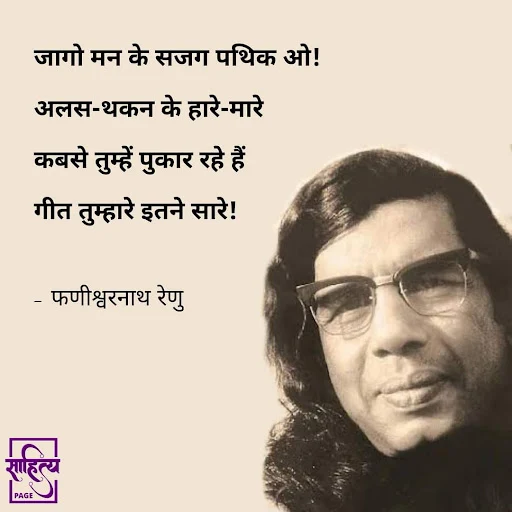
हिंदी उद्धरण: जो आपको प्रेरित करेंगे और दिल को छू जाएंगे

जब हम जीवन में सामान्यतः से ज्यादा दबाव महसूस करते हैं या जब हमें आगे बढ़ने के लिए प्रेरित होने की जरूरत होती है, तो अक्सर हमें मोटिवेशनल उद्धरणों की आवश्यकता होती है। यहां हम आपके साथ कुछ ऐसे हिंदी उद्धरण साझा कर रहे हैं जो आपको प्रेरित करेंगे और आपके दिल को छू जाएंगे:

1. "जो लोग रुक जाते हैं, वे हार जाते हैं।" - अपूर्वा चौधरी
इस उद्धरण में बताया गया है कि सफलता को प्राप्त करने के लिए हमें कभी भी हार नहीं माननी चाहिए।
अपनी विशेषताओं का प्रयोग करो, जीवन के हर कदम मे प्रगति का अनुभव होगा !
2. "जीत वही होता है जो लोग कभी नहीं हारते।" - विजय अमृत्राज
यह उद्धरण हमें बताता है कि सफलता के लिए हमें कभी भी हार नहीं माननी चाहिए, बल्कि हमें हर समय प्रयास करते रहना चाहिए।

3. "कर्म करो, फल की चिंता मत करो।" - भगवद गीता
इस उद्धरण में हमें सिखाया जाता है कि हमें अपना कर्तव्य करते रहना चाहिए और फल की चिंता नहीं करनी चाहिए।
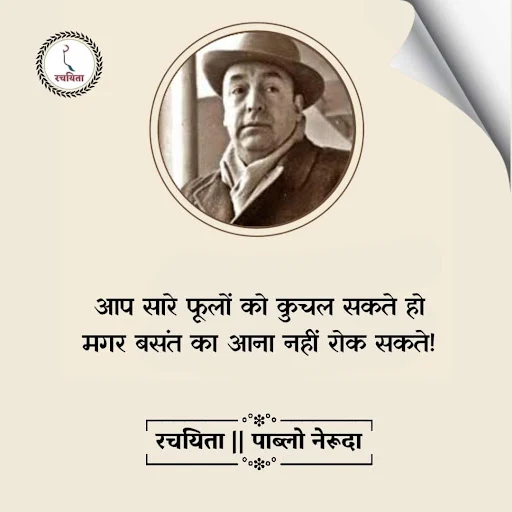
4. "असफलता सफलता का दरवाज़ा है।" - कृष्ण मुरारी मिश्र
यह उद्धरण हमें सिखाता है कि हमें असफलता को एक अवसर के रूप में देखना चाहिए और निरंतर प्रयास करना चाहिए।
ये थे कुछ हिंदी उद्धरण जो आपको प्रेरित करेंगे और आपके दिल को छू जाएंगे। आप इन्हें अपने जीवन में शामिल करके सकारात्मक सोच और क्रियाएं बढ़ा सकते हैं।

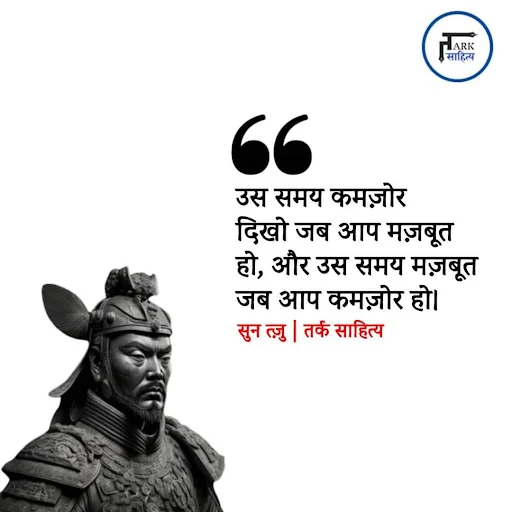
अपडेट के लिए ब्लॉगपोस्ट पर आते रहें। 

1. हिंदी में प्रेरणादायक उद्धरण

2. दिल को छू जाने वाले हिंदी विचार

3. उत्कृष्ट हिंदी अनमोल वचन

4. उद्धरणों से जीवन में प्रेरित कैसे हों

5. हाई CPC हिंदी ब्लॉग टॉपिक्स

6. लोकप्रिय हिंदी विचार

7. उद्धरण ब्लॉगिंग: कम वॉल्यूम लेकिन उच्च CPC की कुंजीयों का चयन

8. उद्धरणों का उच्च भुगतान वाला विषय

9. लोकप्रिय उद्धरणों के साथ हिंदी ब्लॉगिंग

10. हिंदी उद्धरण के लिए LSI की कुंजीयों का उपयोग

अक्सर पूछे जाने वाले प्रश्न 

प्रश्न: "हिंदी उद्धरण का महत्व क्या है?"
उत्तर: हिंदी उद्धरण हमें जीवन में प्रेरित करते हैं और हमारे दिल को छू जाते हैं। ये हमें साहस, संघर्ष और सफलता की ओर प्रेरित करते हैं।
प्रश्न: "हिंदी उद्धरण को कैसे सही समय पर उपयोग किया जा सकता है?"
उत्तर: हिंदी उद्धरण को सही समय पर उपयोग करके हम अपने जीवन में नई प्रेरणा और उत्साह पैदा कर सकते हैं। जब हमे जरुरत होती है, तो हमें याद दिलाते हैं कि कुछ नामी लोगों ने कितने मुश्किल हालातों का सामना करके अपने लक्ष्यों को हासिल किया।
प्रश्न: "हिंदी उद्धरण का सबसे महत्वपूर्ण लाभ क्या है?"
उत्तर: हिंदी उद्धरण हमें जीवन की अनगिनत सीखें देते हैं। इन्हें सुनकर हम अपने दर्दों, चुनौतियों और संघर्षों के सामना करने की क्षमता प्राप्त करते हैं और नए ऊँचाइयों की ओर बढ़ते हैं।

प्रश्न: "क्या हिंदी उद्धरण हमारे मानसिक स्वास्थ्य को सुधार सकते हैं?"
उत्तर: हां, हिंदी उद्धरण हमारे मानसिक स्वास्थ्य को सुधार सकते हैं। ये हमें प्रेरित करते हैं, हमें संघर्ष के साथ सामना करने की क्षमता प्रदान करते हैं और हमारे आत्मविश्वास को बढ़ाते हैं।

प्रश्न: "कौन से हिंदी उद्धरण विचारों को हमें नए दिशानिर्देश और प्रेरणा प्रदान करते हैं?"
उत्तर: कुछ हिंदी उद्धरण जैसे कि "जो लोग रुक जाते हैं, वे हार जाते हैं", "कर्म करो, फल की चिंता मत करो", और "जीत वही होता है जो लोग कभी नहीं हारते" हमें नए दिशानिर्देश और प्रेरणा प्रदान करते हैं। 

Crossing Boundaries of Beauty: Exploring the World's Most Stunning Bridges

 Crossing Boundaries of Beauty: Exploring the World's Most Stunning Bridges


Introduction:
Bridges are not just structures that connect two points; they are feats of engineering and design that inspire awe and admiration. From majestic spans that soar over vast landscapes to intricate architectural marvels, the world is adorned with breathtaking bridges that captivate the imagination. In this blog, we'll embark on a journey to discover some of the most beautiful bridges ever built, each with its own unique charm and significance.

Golden Gate Bridge, San Francisco, USA:
Standing as an iconic symbol of San Francisco and a marvel of engineering, the Golden Gate Bridge is renowned for its stunning Art Deco design and vibrant orange hue. Spanning the strait of the same name, this suspension bridge offers panoramic views of the city skyline and the picturesque San Francisco Bay. Its graceful curves and towering presence make it a timeless masterpiece that continues to enchant millions of visitors each year.


Tower Bridge, London, UK:
With its distinctive twin towers and intricate Victorian Gothic design, Tower Bridge is a quintessential symbol of London's rich architectural heritage. Spanning the River Thames, this iconic bascule and suspension bridge dazzles with its ornate detailing, including wrought-iron latticework and neo-Gothic turrets. Illuminated against the backdrop of the city's skyline, Tower Bridge is a captivating sight that embodies the elegance and grandeur of the British capital.


Pont du Gard, Vers-Pont-du-Gard, France:
A testament to the ingenuity of ancient Roman engineering, the Pont du Gard is a UNESCO World Heritage site that spans the Gardon River in southern France. Built over 2,000 years ago, this towering aqueduct bridge is a marvel of precision stone masonry, with three tiers of arches rising majestically above the tranquil countryside. Its graceful silhouette against the backdrop of lush greenery evokes a sense of timeless beauty and cultural significance.


Sydney Harbour Bridge, Sydney, Australia:
Dominating the skyline of Sydney and spanning the sparkling waters of Sydney Harbour, the Sydney Harbour Bridge is a monumental steel arch bridge that commands attention with its sheer size and striking design. Affectionately known as the "Coathanger" due to its distinctive shape, this iconic landmark offers breathtaking views of the harbor and the Sydney Opera House. Whether admired from afar or traversed on foot, the Sydney Harbour Bridge is a symbol of Australia's spirit of innovation and adventure.


Rialto Bridge, Venice, Italy:
Elegant and enchanting, the Rialto Bridge is a masterpiece of Venetian Renaissance architecture that spans the Grand Canal in Venice. Dating back to the 16th century, this arched stone bridge is adorned with graceful balustrades and ornate sculptures, creating a romantic tableau against the backdrop of gondolas and historic palaces. As one of the most photographed landmarks in Venice, the Rialto Bridge embodies the city's timeless allure and artistic legacy.


Conclusion:
From ancient aqueducts to modern marvels of engineering, the world's most beautiful bridges stand as testaments to human creativity, ingenuity, and perseverance. Whether spanning rivers, straits, or valleys, these architectural wonders captivate the imagination and inspire wonder with their graceful curves, intricate detailing, and breathtaking vistas. As symbols of connection and unity, bridges transcend mere physical structures, serving as timeless icons of beauty and inspiration for generations to come.

Mastering the Art of Negotiation: A Comprehensive Guide to the Basics

 Mastering the Art of Negotiation: A Comprehensive Guide to the Basics


# *Table of Contents*


### *Preface*

### *Acknowledgements*

### *Introduction: Why Negotiation Matters in Everyday Life*

-## *Part I: Understanding the Fundamentals*


### *Chapter 1: What Is Negotiation?*

* Definition and Scope
* Myths and Misconceptions
* Negotiation vs. Bargaining

### *Chapter 2: The Core Principles of Successful Negotiation*

* Mutual Benefit
* Value Creation
* Win–Win vs. Win–Lose Outcomes

### *Chapter 3: Essential Qualities of a Good Negotiator*

* Communication
* Empathy
* Patience
* Emotional Intelligence

## *Part II: Preparing for Negotiation*


### *Chapter 4: Setting Clear Objectives*

* Defining Your Interests and Goals
* Understanding Non-Negociables

### *Chapter 5: Research and Information Gathering*

* Assessing the Other Party
* Understanding Context and Constraints

### *Chapter 6: Building Your Negotiation Strategy*

* BATNA (Best Alternative to a Negotiated Agreement)
* Reservation Price
* ZOPA (Zone of Possible Agreement)

## *Part III: The Negotiation Process*


### *Chapter 7: Opening the Discussion*

* First Impressions
* Establishing Trust
* Setting the Agenda

### *Chapter 8: Effective Communication Techniques*

* Active Listening
* Asking the Right Questions
* Reading Body Language

### *Chapter 9: Persuasion Skills*

* Framing and Reframing
* Anchoring Techniques
* Using Logic and Emotion

### *Chapter 10: Handling Objections and Difficult Situations*

* Dealing with Conflict
* Managing Tension
* Overcoming Resistance

### *Chapter 11: Creating Value and Exploring Options*

* Brainstorming
* Finding Common Ground
* Package Deals

## *Part IV: Reaching and Implementing Agreements*


### *Chapter 12: Closing the Deal*

* Recognizing the Right Moment
* Clarifying Terms
* Avoiding Last-Minute Pitfalls

### *Chapter 13: Drafting Agreements and Documentation*

* Written vs. Verbal Agreements
* Maintaining Precision and Clarity

### *Chapter 14: Follow-Up and Maintaining Relationships*

* Ensuring Compliance
* Building Long-Term Partnerships

## *Part V: Special Negotiation Scenarios*


### *Chapter 15: Negotiation in Business Settings*

* Salary Negotiations
* Vendor and Client Negotiations

### *Chapter 16: Cross-Cultural Negotiation*

* Cultural Sensitivity
* Overcoming Cultural Barriers

### *Chapter 17: Negotiation in Conflict Resolution*

* Mediating Disputes
* Restorative Approaches

## *Part VI: Improving Your Negotiation Skills*

### *Chapter 18: Common Negotiation Mistakes and How to Avoid Them*

### *Chapter 19: Practical Exercises and Real-Life Scenarios*

### *Chapter 20: The Future of Negotiation in the Age of Technology*

### *Conclusion: Becoming a Confident and Strategic Negotiator*


### *Glossary*

### *References*

### Question Bank 

Understanding the Dichotomy: Academic Essays vs. News Articles

 Understanding the Dichotomy: Academic Essays vs. News Articles


In the vast landscape of writing, two distinct genres stand out for their unique styles and purposes: academic essays and news articles. While both serve to inform and educate, they diverge significantly in their approaches, structures, and tones. Understanding the differences between these two forms of writing is crucial for anyone aiming to craft content that resonates with its intended audience. Let's delve into the nuances that set academic essays apart from news articles.

### Academic Essays: Delving Deep into Discourse

Academic essays are scholarly works designed to explore, analyze, and contribute to existing knowledge within a particular field or discipline. These writings are characterized by their formal tone, rigorous research, and structured organization. Here's how they differ from news articles:

1. *Tone and Language*: Academic essays employ a formal tone and specialized vocabulary tailored to the subject matter. They prioritize clarity and precision, often incorporating technical terms and jargon specific to the field.

2. *Depth of Analysis*: Academic essays delve deep into a topic, offering thorough analysis and interpretation of data, theories, or arguments. They aim to contribute new insights or perspectives to the academic discourse, requiring extensive research and critical thinking.

3. *Structure*: Academic essays typically follow a structured format, including an introduction, thesis statement, body paragraphs with supporting evidence, and a conclusion. They adhere to specific citation styles (such as APA, MLA, or Chicago) to acknowledge sources accurately.

4. *Audience*: Academic essays target an audience of scholars, researchers, or students within a particular academic discipline. Writers assume a level of prior knowledge and engage in intellectual dialogue with peers in the field.

### News Articles: Capturing Current Events with Clarity

News articles serve as a primary source of information for the general public, covering current events, trends, or developments in society. They aim to inform, engage, and entertain readers while adhering to journalistic principles of accuracy and objectivity. Here's how they differ from academic essays:

1. *Tone and Accessibility*: News articles adopt a more accessible tone, employing straightforward language that appeals to a broad audience. They prioritize clarity and readability, avoiding overly complex or technical terms.

2. *Timeliness*: News articles focus on timely topics or events, providing up-to-date information and analysis on breaking news or relevant issues. They aim to capture the interest of readers and address their immediate concerns.

3. *Structure*: News articles typically follow a standardized structure known as the inverted pyramid, with the most essential information presented at the beginning followed by additional details and background information. They often include quotes from sources and multimedia elements to enhance engagement.

4. *Audience*: News articles target a diverse audience of readers, including the general public, policymakers, and stakeholders. Writers aim to inform and persuade, presenting information in a way that is accessible and engaging to a wide range of readers.

### Bridging the Gap: Finding Common Ground

While academic essays and news articles differ in style and purpose, they share a common goal of communicating information effectively to their respective audiences. Writers can benefit from understanding the conventions and expectations of each genre, adapting their writing style accordingly to achieve maximum impact.

In conclusion, the difference in writing style between an academic essay and a news article lies in their tone, depth of analysis, structure, and target audience. By recognizing these distinctions, writers can navigate the unique demands of each genre and produce content that informs, educates, and engages readers effectively.

Unveiling the Essential Elements of Effective Content Writing

 Unveiling the Essential Elements of Effective Content Writing


In the digital age, where content reigns supreme, mastering the art of content writing is essential for businesses, bloggers, and marketers alike. But what separates good content from the rest? What are the fundamental elements that contribute to engaging, compelling, and impactful writing? Let's dive into the core components of effective content creation:

Clarity and Conciseness: The hallmark of good content is clarity. It should convey your message in a straightforward and concise manner, making it easy for readers to understand and digest. Avoid jargon and unnecessary complexity, and strive for clarity in both language and structure.
Relevance and Audience-Centricity: Successful content is tailored to the needs, interests, and preferences of your target audience. Before writing, take the time to understand your audience's demographics, pain points, and aspirations. Craft content that resonates with them, addresses their questions, and adds value to their lives.
Compelling Headlines and Introductions: A captivating headline is your content's first impression, enticing readers to click and delve deeper. Likewise, a compelling introduction sets the tone for the rest of your piece, drawing readers in and piquing their curiosity. Use power words, intriguing questions, or intriguing statistics to hook your audience from the outset.
Engaging Structure and Formatting: Break up your content into digestible chunks with clear headings, subheadings, and bullet points. This not only enhances readability but also makes your content more scannable, allowing readers to quickly find the information they're looking for. Incorporate visuals such as images, infographics, or videos to complement your text and enhance engagement.
Value and Authenticity: Good content provides genuine value to the reader. Whether it's educational insights, practical tips, or entertaining stories, ensure that your content offers something of substance. Be authentic in your voice and perspective, and strive to establish trust and credibility with your audience.
SEO Optimization: Incorporating relevant keywords strategically can help improve your content's visibility and ranking in search engine results. Conduct keyword research to identify terms and phrases that align with your content and target audience, and naturally integrate them into your writing. However, prioritize user experience over keyword density, and avoid keyword stuffing at all costs.
Call to Action (CTA): Every piece of content should conclude with a clear and compelling call to action, prompting readers to take the next step. Whether it's subscribing to your newsletter, downloading a resource, or making a purchase, guide your audience towards the desired action with persuasive CTAs.
In conclusion, the basic elements of good content writing revolve around clarity, relevance, engagement, value, authenticity, SEO optimization, and effective calls to action. By mastering these elements and applying them consistently across your content, you can create compelling, impactful, and memorable writing that resonates with your audience and drives results

The Most Unique Pieces Of Art

Defining the "most unique" pieces of art is subjective and can vary greatly depending on individual perspectives and tastes. However, there are several artworks that are often regarded as unique due to their innovative concepts, groundbreaking techniques, or profound cultural significance. Here are a few examples:

1. *Salvador Dalí's "The Persistence of Memory" (1931)*: This surrealist masterpiece is known for its dreamlike imagery, featuring melting clocks draped over various objects. Dalí's unconventional portrayal of time and space challenges traditional artistic conventions, making it a truly unique and iconic work.


2. *Marcel Duchamp's "Fountain" (1917)*: This controversial piece consists of a urinal turned on its side, signed with the pseudonym "R. Mutt." Duchamp's concept of "readymades" revolutionized the art world by challenging the notion of what could be considered art, making "Fountain" a landmark in the history of conceptual art.

3. *Yayoi Kusama's "Infinity Mirror Rooms"*: Kusama's immersive installations, characterized by mirrored rooms filled with an endless array of multicolored lights or polka-dotted forms, offer viewers a unique sensory experience. These installations blur the boundaries between reality and illusion, creating mesmerizing and otherworldly environments.

4. *Banksy's Street Art*: Banksy's anonymous and politically charged street art pieces have garnered worldwide attention for their wit, subversiveness, and social commentary. His stenciled works often appear unexpectedly in public spaces, challenging societal norms and sparking conversations about art's role in contemporary culture.

5. *Hilma af Klint's Abstract Paintings*: Long before abstract art became mainstream, Swedish artist Hilma af Klint was experimenting with non-representational forms and esoteric symbolism in her paintings. Her series of large-scale abstract works, created in the early 20th century, predates similar movements by male artists like Kandinsky and Mondrian, positioning her as a pioneer of abstract art.

These are just a few examples of artworks that are often considered unique for their innovative concepts, unconventional techniques, or significant contributions to the evolution of art. However, the beauty of art lies in its diversity, and what one person considers unique, another may see differently, emphasizing the subjective nature of artistic appreciation.

Maximizing Your Saturday: A Guide to Productive and Relaxing Weekend Routines

 Maximizing Your Saturday: A Guide to Productive and Relaxing Weekend Routines

# *Table of Contents*


**Maximizing Your Saturday: A Guide to Productive and Relaxing Weekend Routines**

### *Preface*

### *Introduction: Why Saturdays Matter*

## *Section I: Designing a Perfect Saturday*

1. *Understanding the Power of Weekend Planning*
2. *Balancing Productivity and Relaxation*
3. *Creating a Personal Saturday Blueprint*

## *Section II: Morning Mastery*

4. *The Ideal Saturday Morning Routine*
5. *Healthy Habits to Kickstart the Day*
6. *Mindfulness, Meditation & Mental Reset*
7. *Quick Wins: Small Tasks with Big Impact*

## *Section III: Productive Midday Strategies*

8. *Organizing Your Home & Life*
9. *Smart Errand Planning*
10. *Skill Building and Personal Development Time*
11. *Creative Projects and Hobby Exploration*

## *Section IV: Energizing Afternoon Practices*

12. *Fitness, Outdoor Activities & Health Boosts*
13. *Socializing with Purpose*
14. *Mindful Breaks and Digital Detox*
15. *Meal Prep & Cooking for the Week Ahead*

## *Section V: Unwinding the Evening*

16. *Creating a Relaxing Evening Atmosphere*
17. *Self-Care Rituals for Deep Relaxation*
18. *Family Time and Meaningful Connections*
19. *Reflecting on Your Day: Journals & Gratitude*

## *Section VI: Smart Planning for Sunday & the Week Ahead*

20. *Preparing for a Stress-Free Sunday*
21. *Weekly Review and Goal Alignment*
22. *Setting Up a High-Performance Week*

## *Section VII: Special Saturday Themes*

23. *Adventure Saturdays: Travel, Exploration & Fun*
24. *Learning Saturdays: Courses, Reading & Skill Upgrade*
25. *Quiet Saturdays: Mental Wellness & Solitude*
26. *Family-Friendly Saturdays: Activities for All Ages*

## *Section VIII: Tools, Templates & Resources*

27. *Saturday Routine Templates*
28. *Habit Trackers and Checklists*
29. *Lifestyle Apps & Tools for Better Weekends*

### *Conclusion: Your Journey to Better Saturdays*

### *Acknowledgments*

### *About the Author*

Introduction:
Saturdays are a precious commodity in our busy lives. It’s the one day of the week where you can choose to be as productive or as leisurely as you desire. How you spend your Saturday can greatly influence your mood, productivity, and overall well-being. In this blog, we’ll explore various ways to make the most of your Saturdays, whether you prefer an active agenda or a day of relaxation.

1. Plan Ahead:
Start your Saturday off right by planning ahead. Take a few moments on Friday evening to jot down a rough schedule for the next day. This can include any tasks you need to accomplish, activities you want to do, or places you want to visit. Having a plan in place will help you stay organized and make the most of your time.

2. Get Active:
If you’re someone who enjoys staying active, Saturdays are the perfect opportunity to engage in physical exercise. Whether it’s going for a morning run, hitting the gym, or participating in a group fitness class, getting your body moving early in the day can boost your mood and energy levels for the rest of the weekend.

3. Pursue Your Passions:
Saturdays are a great time to indulge in your hobbies and passions. Whether you love painting, gardening, playing music, or cooking, set aside some time to engage in activities that bring you joy and fulfillment. Not only will this help you relax and unwind, but it will also rejuvenate your creativity and sense of purpose.

4. Connect with Loved Ones:
Weekends are the perfect opportunity to spend quality time with family and friends. Plan a brunch date, organize a picnic in the park, or host a game night at home. Connecting with loved ones not only strengthens your relationships but also provides much-needed social interaction and support.

5. Embrace Relaxation:
Sometimes, the best way to spend your Saturday is by doing nothing at all. Embrace relaxation by dedicating time to self-care activities such as reading a book, taking a bubble bath, or practicing mindfulness and meditation. Allow yourself to unwind and recharge for the week ahead.

Conclusion:
How you spend your Saturday can significantly impact your overall well-being and satisfaction with life. Whether you prefer a day filled with activity and adventure or one focused on relaxation and rejuvenation, the key is to prioritize activities that bring you joy and fulfillment. By planning ahead and making intentional choices, you can make the most of your Saturdays and set yourself up for a successful and fulfilling weekend.