Science And Technololgy In Ancient India

 Bhojeshwar Temple Bhopal


# *Table of Contents*


*Science and Technology in Ancient India*


## *Preface*

* Purpose of the Book

* Importance of Studying Ancient Indian Scientific Heritage

* Methodology and Sources

## *Chapter 1: Introduction to Ancient Indian Science*

* Evolution of Knowledge Systems in India

* Centres of Learning: Takshashila, Nalanda & Others

* Scientific Spirit in Vedas, Upanishads, and Puranas

* Evidence from Archaeology and Literature

## *Chapter 2: Mathematics in Ancient India*

* Number System and the Concept of Zero

* Decimal System and Place Value

* Algebra and Geometry in Sulbasutras

* Contributions of Aryabhata, Brahmagupta, and Bhaskara

* Trigonometry and Astronomical Calculations


## *Chapter 3: Astronomy and Cosmology*

* Indian Concepts of Space, Time, and Universe

* Astronomical Observations in Vedic Texts

* Aryabhatiya & Surya Siddhanta

* Planetary Motion & Solar-Lunar Calculations

* Instruments Used in Ancient Astronomy


## *Chapter 4: Medicine and Healthcare (Ayurveda & Surgery)*


* Foundations of Ayurveda: Charaka Samhita

* Surgical Techniques in Sushruta Samhita

* Anatomy, Instruments, and Procedures

* Pharmacology and Herbal Science

* Public Health Practices in Ancient India


## *Chapter 5: Chemistry (Rasayana & Rasashastra)*

* Metallurgical Knowledge

* Extraction and Processing of Metals

* Early Chemical Processes: Distillation, Dyeing, and Alchemy

* Contributions of Nagarjuna and Indian Alchemists

## *Chapter 6: Physics and Applied Sciences*

* Concepts of Motion, Heat, and Light in Indian Texts

* Early Understanding of Energy and Sound

* Mechanical Devices and Innovations

* Principles of Architecture and Civil Engineering

## *Chapter 7: Agriculture and Animal Husbandry*

* Ancient Farming Techniques

* Irrigation Systems and Water Management

* Soil Science and Crop Rotation

* Domestication, Breeding, and Veterinary Practices

## *Chapter 8: Metallurgy and Material Science*


* Iron and Steel Production (Wootz Steel)

* Copper, Bronze, and Zinc Technologies

* Rust-resistant Iron Pillar of Delhi

* Craftsmanship in Jewellery and Metal Art


## *Chapter 9: Engineering and Technology*

* Town Planning in Harappan Civilization

* Architecture of Temples and Monuments

* Water Harvesting Structures

* Shipbuilding and Maritime Technology

## *Chapter 10: Environmental Science and Ecology*

* Conservation Practices in Ancient Texts

* Forest Laws and Wildlife Protection

* Sustainable Living Traditions

* Traditional Knowledge Systems and Ecology

## *Chapter 11: Communication, Literature, and Education*

* Writing Systems and Scripts

* Scientific Literature & Manuscript Tradition

* Education Systems: Gurukula to Universities

* Knowledge Transmission through Oral Tradition


## *Chapter 12: Indian Contributions to Global Science*

* Mathematical and Astronomical Exchanges

* Influence on Arab, Persian, and European Thinkers

* Dissemination of Medical and Metallurgical Knowledge

## *Chapter 13: Myths vs. Scientific Facts*

* Separating Evidence from Belief

* Misinterpretations in Popular Media

* Responsible Understanding of Heritage

## *Chapter 14: Relevance of Ancient Indian Science Today*

* Revival of Traditional Knowledge

* Applications in Modern Scientific Research

* Case Studies from Ayurveda, Metallurgy, and Astronomy

## *Appendices*

* Chronology of Major Scientific Achievements

* Glossary of Key Terms

* Important Manuscripts and Inscriptions

* Suggested Readings

#Question Bank

India produced great scientists and mathematicians. Baudhayana in 800 BCE calculated the value of pi and discovered what is now known as the Pythagoras' theorem. Pythagoras lived in sixth century BCE Greece; and the third century CE sophist Philostratus says that Pythagoras studied under Hindu sages or gymnosophists in India. Brahmagupta lived in seventh century Ujjain and wrote several books on mathematics and astronomy. India was the source of the number system, now called the Arabic numerals because the Arabs took it everywhere. This number system is a feat of genius. It enables all numbers to be expressed with just ten symbols—the numbers 1 through 9 and the symbol for zero. 

Without this key, we would have a separate word for each number and be hopelessly confused. It is this brilliant Indian numeral system that makes mathematics, modern accounting, business deals and computer technology possible; from Wall Street to the space programme, modern civilisation depends on this number system. Brahmagupta was the first to discuss zero as a number and established the basic mathematical rules for it. He did a lot of work in geometry, trigonometry and discovered new theorems. He also explained how to find cubes, cube roots, squares and square roots.

Fifty years before the Italian mathematician Fibonacci wrote about the number sequence, now known as the Fibonacci numbers, a sage named Hemchandra wrote about this sequence, but even he was not the first Indian to do so. An earlier Indian mathematician named Gopala had also studied these numbers. And several earlier Indian mathematicians also knew about them.

In 500 CE, Aryabhata, and later Brahmagupta understood that the earth is round. They talked about gravity, saying that it is the nature of the earth to attract objects, causing them to fall towards the ground.

Bhaskaracharya wrote about arithmetic, geometry, algebra and calculus. Isaac Newton and Gottfried Wilhelm von Leibniz are given credit for being the first to introduce calculus, but Bhaskaracharya had written about it 500 years earlier. 

Bhaskaracharya had calculated the time taken for the earth to travel around the sun: 365.2588 days. The modern measurement is 365.25636, a difference of just 3.5 minutes. He did not work with instruments or computers. He knew that the earth travels around the sun at a time when the West did not; when people thought the sun revolved around the earth.

Science And Technology

But it was not in mathematics alone that Indians flourished. Sushruta was a great surgeon who used 125 different surgical instruments and herbal sprays before an operation to prevent sepsis. His greatest contribution was in the fields of plastic surgery and cataract removal. When the British arrived, they learned these sciences from Indian doctors, cut off their fingers so that the Indians could never practise again, and introduced plastic and cataract surgery in British medical colleges as their invention. Charaka wrote about herbal treatments that Indians are just rediscovering. In 300 BCE, Patanjali codified the Yoga sutras. In 200 BCE, Kanada wrote about gravity and that the universe is made up of atoms. Nagarjuna was a great metallurgist and chemist. The list is endless.

Agriculture

Indian science and technology began at Mehrgarh (now in Pakistan) and continued throughout the country’s history. People developed different systems of agriculture, irrigation, canals and water storage systems, including artificial lakes, by 3,000 BCE. Cotton was cultivated by 5,000–4,000 BCE. They farmed with animal-drawn ploughs in the Indus Civilisation in 2,500 BCE. The people of the Indus-Sarasvati region used weights and measures. Large numbers are used in the Vedas. 

The earliest-known dock in the world, which could berth and service ships, was situated at Lothal in Gujarat. Indian metallurgy was very advanced. Steel was made in India from 500 BCE. King Porus gifted Alexander a steel sword in 326 BCE. The iron pillar located in Delhi is seven metres high and has never rusted. Over 5,000 years ago, there were dentists in the Indus-Sarasvati region. A modern scientist who was looking at the teeth of people who had died there long ago found that ancient dentists had drilled teeth as far back as 9,000 years ago. 
Stone Age Technology

Vedic Period

"Atharvaveda, also known as the Veda of 'magical formulas', have made mathematics simpler. The binary system used in all modern computers and computer-based devices originated in the Atharvaveda.
The vedic sciences include Jyotish (vedic astrology, science of time), Ayurveda (the science of healing), Tantra (the knowledge of universal patterns of energies underlying visible and invisible worlds, includes science of mantras, yantra, and sacred myths) and Vastu (science of space and placement) and last but not ..'
Some of the ancient technologies remain useful even today: metallurgical techniques, ecological and agricultural traditions, Ayurveda and various local health traditions, water management (see Module on Water Management), among others. They are part of what has been called India's traditional knowledge systems.
11 Great Inventions We Can Thank India For
  • [a]The Zero. 
  • [b] Th
  • Buttons. ...
  •  Ayurveda
  • The USB (Universal Serial Bus) ...
  • Board games. ...
  • Yoga. 
  • Cataract surgery. ...
    • Natural fibres.
    ...Chalcolithic Period[2000B.C To 700 B.C]
  • With the end of the Neolithic Age, several cultures started using metal, mostly copper and low grade bronze. The culture based on the use of copper and stone was termed as Chalcolithic meaning stone-copper Phase. In India, it spanned around 2000 BC to 700 BC.
  • Copper tools: Copper was the first metal that was used with stone. Therefore, copper tools were used and made by people in the chalcolithic age. 
  • In the Chalcolithic period, copper predominated in metalworking technology. Hence it was the period before it was discovered that by adding tin to copper one could create bronze, a metal alloy harder and stronger than either component.
  • The Chalcolithic period, or Copper Age, was an era of transition between the stone tool-using farmers of the Neolithic and the metal-obsessed civilizations of the Bronze Age. The Copper Age was really a phenomenon of the eastern Mediterranean regions, and occurred from roughly 3500 to 2300 BCE.23-Dec-2021
  • Chalcolithic Era innovations saw usage stone and also use of metals like copper was widespread in this era
  • . ...
  • Indus Valley Town Planning


  •  ...
  • ...


    Indulge Your Taste Buds: Exploring Our Food-Love and Appreciation

    Indulge Your Taste Buds: Exploring Our Food-Love and Appreciation


    Introduction:

    Welcome to a journey of culinary delight where we delve into the essence of food-love and appreciation. In this blog, we'll explore the rich tapestry of flavors, cultures, and emotions that intertwine to create our profound connection with food. From savoring sumptuous dishes to unraveling the stories behind them, join us as we celebrate the joy of indulging in culinary experiences that nourish both body and soul.

    The Art of Food-Love:

    Food transcends mere sustenance; it's an art form that speaks to our senses and ignites our passions. Whether it's the aroma of freshly baked bread, the vibrant colors of a farmer's market, or the exquisite presentation of a gourmet meal, every aspect of food has the power to evoke profound emotions. Our food-love is expressed through the care and attention we give to selecting ingredients, the creativity we unleash in the kitchen, and the pleasure we derive from sharing meals with loved ones.

    Exploring Culinary Diversity:

    One of the most beautiful aspects of food is its ability to bridge cultural divides and unite people from all walks of life. From street food stalls in bustling markets to Michelin-starred restaurants, the world is a treasure trove of culinary delights waiting to be explored. Join us as we embark on a journey across continents, sampling exotic flavors, and learning about the diverse culinary traditions that enrich our global palate.

    Nourishing Body and Soul:

    Food is more than just sustenance; it's a source of nourishment for both body and soul. The act of preparing and sharing meals with others fosters a sense of connection and community that is essential for our well-being. Whether it's a cozy family dinner, a romantic date night, or a festive gathering with friends, food has the power to create lasting memories and strengthen bonds that transcend time and distance.

    Embracing Food Appreciation:

    In a fast-paced world filled with distractions, taking the time to appreciate the food we eat can be a transformative experience. From practicing mindful eating to learning about the origins of our favorite dishes, embracing food appreciation allows us to cultivate a deeper connection with the culinary world around us. Join us as we explore simple yet meaningful ways to savor every bite and express gratitude for the abundance that surrounds us.

    Conclusion:

    As we conclude our exploration of food-love and appreciation, we invite you to continue embracing the joy of indulging your taste buds and nourishing your soul through culinary adventures. Whether you're a seasoned foodie or someone who simply enjoys a good meal, there's always something new to discover and savor in the world of food. So, let's raise our glasses and toast to the endless delights that await us on this delicious journey called life. Cheers

    All of us have three meals a day. They sustain and nourish us to sit, move ,speak , smile, and complete tasks .For the ways food serves us ,it is important to love and respect what we eat. We often find ourselves grumbling with statements like- I am bored of eating this every morning, This dish is so bland. I wish my mother could cook better. We also worry or feel guilty-I might put on weight ,What if my sugar levels increase ,This doesn't taste fresh, not think of its effect. Lets create thoughts of gratitude and love before and while eating.  The quality or quantity may not always be perfect .Never mind -we have enjoyed (and will continue to enjoy) thousands of delicious meals. The few imperfections should not change our respect for food.
            Food that we eat everyday is nutrition for our body .We choose what is healthy. We can choose what is tasty, but if we say we will be happy when we eat something specific ,it means our happiness becomes dependent on our food. Sit back ,and visualize yourself happy while you are having your meals ,and radiating happy energy to your food .We often create an energy of irritation when we eat something which is not tasty for us. Food may not be tasty...but happiness or irritation is our choice . Practice today to not allow your food to influence your mind .Criticizing what you are eating radiates negative energy to the food which then influence our mind Before every meal today ,pause  and reaffirm I am happy and calm as I eat my meal .I energies the food with my positive vibrations and happiness.

    KEEP VISITING THE BLOG FOR UPDATE ON FOLLOWING 

    Gourmet dining experience
    Culinary delights
    Exotic cuisine exploration
    Fine dining indulgence
    Epicurean adventures 
    Savoring food stories
    Culinary journey blog
    Taste bud exploration
    Food appreciation articles
    Nourishing the soul with food 
    Food-love trends
    Culinary appreciation on the rise
    Exploring global flavors
    Trending food experiences
    Rising interest in gourmet dining 
    Gastronomic delights
    Taste sensations
    Epicurean pleasures
    Flavorful experiences
    Culinary escapades 

    FREQUENTLY ASKED QUESTIONS AND THEIR ANSWERS 

    *Frequently Asked Questions about "Indulge Your Taste Buds: Exploring Our Food-Love and Appreciation"*

    *1. What is the main focus of the blog "Indulge Your Taste Buds"?*
       - The blog celebrates the joy of food-love and appreciation, exploring the rich tapestry of flavors, cultures, and emotions surrounding culinary experiences.

    *2. What can readers expect to find in the blog?*
       - Readers can expect to find articles delving into various aspects of food, including culinary diversity, the art of cooking, mindful eating practices, and the importance of food appreciation.

    *3. Are there specific types of cuisines or food experiences featured in the blog?*
       - Yes, the blog covers a wide range of culinary experiences, from exploring global flavors to savoring homemade dishes, gourmet dining, street food, and everything in between.

    *4. How often is the blog updated with new content?*
       - New content is added regularly to keep readers engaged and inspired. The frequency of updates may vary, but the aim is to provide fresh and insightful articles on a consistent basis.

    *5. Can readers contribute their own food stories or experiences to the blog?*
       - Absolutely! The blog welcomes contributions from readers who are passionate about food and would like to share their own culinary adventures, recipes, or insights with the community.

    *6. Is there a specific audience that the blog caters to?*
       - While the blog appeals to anyone with a love for food and culinary exploration, it particularly resonates with food enthusiasts, home cooks, aspiring chefs, and anyone seeking to deepen their appreciation for the culinary arts.

    *7. How can readers stay updated with the latest posts and news from the blog?*
       - Readers can subscribe to the blog's newsletter or follow its social media channels for regular updates on new articles, featured recipes, upcoming events, and more.

    *8. Does the blog offer resources or recommendations for culinary enthusiasts?*
       - Yes, the blog often provides recommendations for cookbooks, cooking classes, food festivals, and other resources to help readers further explore their passion for food and culinary creativity.

    Eid Mubarak 2022

    This year, Eid-Ul-Fitr will be marked on May 3, 2022. However, the actual date may vary as per the moon sighting. Eid-Ul-Fitr is marked on the first day of Shawwal - the month that comes after Ramadan in the Hijri calendar.
    Eid al-Fitr

     Eid al-Fitr marks the end of Ramadan, the Muslim holy month of fasting, and is celebrated during the first three days of Shawwal, the 10th month of the Islamic calendar (though the Muslim use of a lunar calendar means that it may fall in any season of the year).

    May Allah shower his countless blessings on believers during the holy month of Ramadan and always. May this Eid be filled with pleasure, happiness, wealth, and the affection of your loved ones. On this Eid Ul Fitr, I wish you all the best. Hello on the time of Eid al-Fitr.

    While fasting, Muslims are said to feel the unity of the Ummah (community), as they share a purely religious practice away from politics and nationalism. "Fasting also brings out the good in people, as they gather to do good deeds, be kind to the poor and meet their family members," the Grand Mufti said.
    Eid-ul-Fitr, one of the most celebrated festivals in Islam, marks the end of the holy month of Ramadan, a month when Muslims across the world hold fast from dawn to dusk. Muslims celebrate Eid-ul-Fitr in the month of Shawwal. They offer special prayers on this day.
    Eid al-Fitr - which means 'festival of the breaking of the fast - is celebrated at the end of Ramadan, which is a month when many adult Muslims fast. Eid al-Adha - which means 'feast of the sacrifice' - is celebrated just over two months later, at the same time when many Muslims perform the Hajj pilgrimage.

    History and significance

    It is believed that the Holy Quran was first revealed to Prophet Muhammad during the month of Ramadan. So, Muslims consider this a holy month and hold fast from dawn to dusk and dedicate themselves to praying to Allah. Eid-ul-Fitr marks the end of this month. With a sumptuous meal, get-togethers Muslims celebrate this festival to mark the successful completion of Ramadan.

    Parshuram Jayanti 2022: Honoring the Mighty Warrior's Legacy

    Title: Parshuram Jayanti 2022: Honoring the Mighty Warrior's Legacy


    Introduction:

    Parshuram Jayanti is an auspicious occasion celebrated by Hindus to commemorate the birth anniversary of Lord Parshuram, the sixth incarnation of Lord Vishnu. This day holds significant cultural and religious importance, especially among followers of the Hindu faith. As we observe Parshuram Jayanti 2022, it's a time to reflect on the remarkable legacy of this mighty warrior and the lessons we can glean from his life.

    1. The Legend of Parshuram:

        Unraveling the Mythology of Lord Parshuram: The Axe-Wielding Warrior's Tale


    Introduction:

    In the rich tapestry of Hindu mythology, few figures command as much reverence and intrigue as Lord Parshuram. As we delve into the annals of ancient lore, the saga of this formidable deity unfolds, revealing a narrative replete with valor, devotion, and divine purpose. Join us on a journey through the mythological realm as we explore the enigmatic origins, upbringing, and sacred mission of Lord Parshuram, the revered axe-wielding warrior.

    The Birth of Parshuram:
    According to Hindu scriptures, Lord Parshuram was born to the illustrious sage Jamadagni and his wife Renuka. His birth, like many divine incarnations, was not ordinary but rather steeped in mystique and divine intervention. Legend has it that Parshuram emerged from the womb of Renuka with a divine axe in hand, a prelude to his destined role as a fierce warrior destined to uphold righteousness.

    Upbringing and Training:
    Raised amidst the serene environs of the hermitage, Parshuram's formative years were shaped by the austere discipline of his father, Sage Jamadagni. Under the tutelage of his revered father, Parshuram imbibed the teachings of dharma (righteousness) and the art of combat. His training in warfare, coupled with his unwavering devotion to his parents, forged him into a formidable warrior of unparalleled skill and valor.

    The Purpose of Incarnation:
    As with all divine incarnations in Hindu mythology, Lord Parshuram's descent to the mortal realm was driven by a sacred purpose. Foremost among his missions was the eradication of adharma (unrighteousness) and the protection of the pious and virtuous. Endowed with extraordinary prowess and an indomitable spirit, Parshuram embarked on a divine quest to vanquish tyrants and restore balance to the cosmos.

    Parshuram's exploits in the epic battles against malevolent forces, including his legendary confrontation with the Kshatriya warriors, stand as testament to his unwavering commitment to righteousness. Throughout his illustrious journey, Parshuram epitomized the virtues of valor, humility, and unwavering devotion to duty, inspiring generations of devotees to emulate his noble example.

    Conclusion:
    As we reflect on the mythological tapestry woven around Lord Parshuram, we are reminded of the timeless wisdom and divine purpose that underpins his saga. From his miraculous birth to his valiant exploits on the battlefield, Parshuram's story serves as a beacon of inspiration for seekers of truth and righteousness. May the legacy of the axe-wielding warrior continue to resonate in the hearts of devotees, guiding them on the path of dharma and enlightenment.
       - Highlight his extraordinary abilities, including his mastery of weaponry and martial arts, which earned him the title of the "axe-wielding warrior."

    2. Historical Significance:
       - Explore the historical context of Parshuram Jayanti and its relevance in Hindu culture.
       - Discuss the significance of Lord Parshuram's contributions to society, particularly his role in upholding righteousness and protecting the innocent.

    3. Celebrations and Rituals:
       - Provide insights into how Parshuram Jayanti is celebrated across different regions of India and among Hindu communities worldwide.
       - Discuss common rituals observed on this day, such as prayers, fasting, and visiting temples dedicated to Lord Parshuram.

    4. Lessons from Parshuram's Life:
       - Draw parallels between the challenges faced by Lord Parshuram and contemporary issues.
       - Highlight the virtues exemplified by Parshuram, such as loyalty, courage, and devotion, and discuss how these qualities can inspire us in our own lives.

    5. Parshuram Jayanti in Modern Times:
       - Reflect on the relevance of Lord Parshuram's teachings and principles in today's world.
       - Discuss how the spirit of Parshuram Jayanti can encourage individuals to stand up against injustice and strive for righteousness.

    6. Conclusion:
       - Summarize the key points discussed in the blog and reiterate the significance of honoring Lord Parshuram's legacy.
       - Encourage readers to reflect on the lessons learned from Parshuram's life and incorporate them into their own spiritual journey.


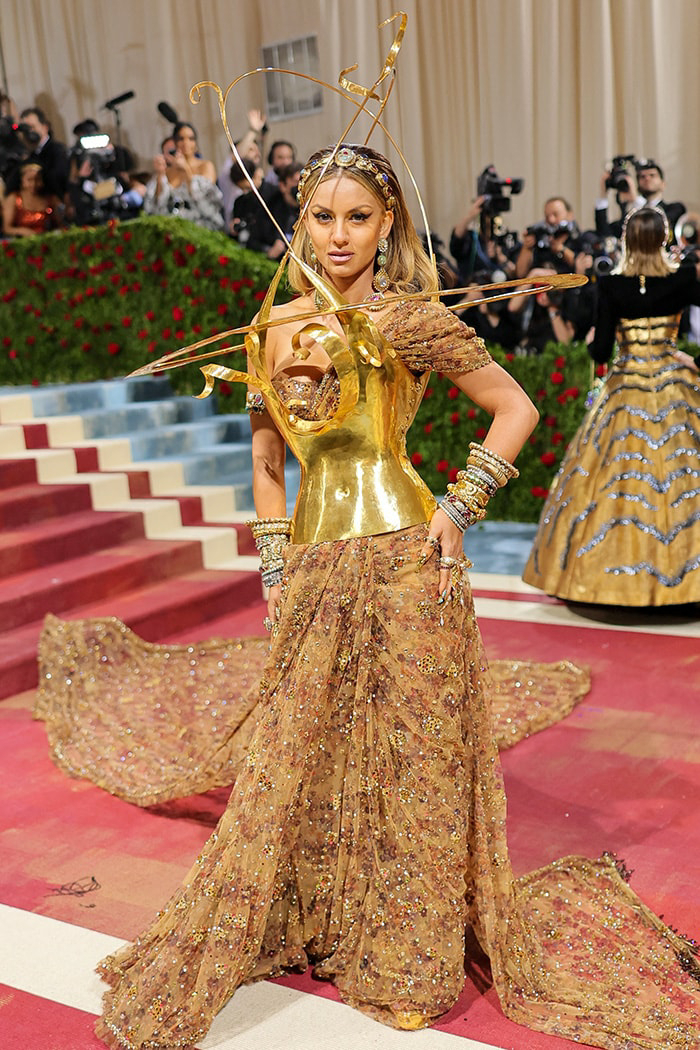
    Met Gala 2023 -The fashion fete

    This year's theme centers on Karl Lagerfeld, the late German designer best known for his work as creative director of Chanel. We'll show you the most talked-about looks as celebrities make their way across the red carpet starting at 7 p.m. on CBS News New York.


    Traditionally held on the first Monday in May, the fashion-forward fête will take place on Monday, May 2 this year. Vogue will be livestreaming the red carpet arrivals starting at 6 p.m. ET.

    Where is the Met Gala taking place?

    The gala takes place at the Metropolitan Museum of Art in New York City, and raises funds for the museum’s Costume Institute.

    What is this year’s theme?

    This year’s theme is “In America: An Anthology of Fashion,” following 2021’s “In America: A Lexicon of Fashion.”

    It’s based on a two-part exhibition from the museum, the second installation of which will “reflect the evolution of American style” and also “explore the work of individual tailors, dressmakers, and designers,” as the Costume Institute’s head curator, Andrew Bolton, told Vogue.

    The 2022 theme, Gilded Glamour, and the 2021 theme, American Independence, are tied to the museum's “In America: A Lexicon of Fashion,” which the Met describes as “a two-part exploration of fashion in the United States."

    Who is on the guest list?

    While Vogue keeps its guest list top secret until just before the big event, Page Six Style exclusively revealed that Megan Thee Stallion will attend this year’s gala wearing Moschino.

    Beyond that, the Met Gala regularly draws the biggest celebs in the game — Rihanna, Kim Kardashian, Beyoncé, Lady Gaga and Taylor Swift have all attended multiple times — so expect plenty of other major names.

    The Met Gala, or Met Ball, formally called the Costume Institute Gala or the Costume Institute Benefit, is known globally as "Fashion's Biggest Night" and "Celebrities' Biggest Night".[4][5] The high-profile mega-event, also known as the "Super Bowl of celebrity red carpets",[6] is an annual fundraising gala held for the benefit of the Metropolitan Museum of Art's Costume Institute in New York City.

    The gala is organized by Vogue haute couture magazine and marks the opening of the Costume Institute's annual fashion exhibit on the Upper East Side of Manhattan.[7] The guest list has grown to include celebrities from the worlds of fashion, entertainment, business, sports, and politics who would eventually grace the pages of Vogue.[8] Each year's event celebrates the specific theme of that year's Costume Institute exhibition, and the exhibition sets the tone for the formal dress of the night, since guests are expected to curate their fashion to match the theme of the exhibit.

    Kareena Kapoor, Malaika Arora shower love on Natasha Poonawalla's Met Gala look, Karisma Kapoor says 'that's my girl'

    Vintage Won The Met Gala 2022.
    The Met Gala 2022's best and worst dressed stars: Elon Musk looked dashing with his mum Maye, Kim K sparkled in Marilyn Monroe's iconic dress, and Brooklyn Beckham and Nicola Peltz wore Valentino.
    The familiar mechanisms of the night started turning into gear. Ariana Debose, Anderson Paak, and Emma Stone as they depart The Mark Hotel for the 2022 Met Gala on May 02, 2022 in New York City.

    Zomato Shares Meme On Kylie Jenner's Met Gala 2022 Dress; Internet In Splits


    the first time, all of the Kardashian-Jenner women — including Khloé, Kim Kardashian, Kourtney Kardashian, Kendall Jenner, Kylie Jenner and their mom, Kris Jenner — attended the gala.
    Natasha Poonawalla


      International Workers Day - Sunday, 1 May 2022.(A labour Day)

       International Workers Day 2022 is on Sunday, 1 May 2022.

      The works and contributions of the labourers are given importance on this day. People not only participate in events but also motivate each other to work hard. Labour Day is celebrated on 1 May every year and this year it will be observed on a Sunday.
      The first of May is a national, public holiday in many countries across the world, in most cases as "International Workers' Day" or a similar name.
      May Day, also called Workers' Day or International Workers' Day, day commemorating the historic struggles and gains made by workers and the labour movement, observed in many countries on May 1. In the United States and Canada a similar observance, known as Labor Day, occurs on the first Monday of September.
      • The trade union movement (trade unionism) consists of the collective organisation of working people developed to represent and campaign for better working conditions and treatment from their employers and, by the implementation of labour and employment laws, from their governments. The standard unit of organisation is the trade union.
      • The political labour movement in many countries includes a political party that represents the interests of employees, often known as a "labour party" or "workers' party". Many individuals and political groups otherwise considered to represent ruling classes may be part of, and active in, the labour movement.
      • While it may belong to a tradition of spring festivals, the date was chosen in 1889 for political reasons by the Marxist International Socialist Congress, which met in Paris and established the Second International as a successor to the earlier International Workingmen's Association. They adopted a resolution for a "great international demonstration" in support of working-class demands for the eight-hour day. The date had been chosen by the American Federation of Labor to continue an earlier campaign for the eight-hour day in the United States, which had been the cause of a general strike beginning on 1 May 1886, and culminated in the Haymarket affair, which occurred in Chicago four days later. May Day subsequently became an annual event.[5] The 1904 Sixth Conference of the Second International, called on "all Social Democratic Party organisations and trade unions of all countries to demonstrate energetically on the First of May for the legal establishment of the eight-hour day, for the class demands of the proletariat, and for universal peace".[6]

      • The Haymarket Affair became an international symbol of the struggle for workers' rights, and May 1 was chosen to be International Workers' Day. On this day, socialist parties and trade unions called for workers to demonstrate for the eight-hour day and in favour of peaceful protest.

        Solar eclipse 2022- A Black Moon

        Blogging In March ,Blogging In English

         A partial solar eclipse will occur on Saturday, April 30, 2022. A solar eclipse occurs when the Moon passes between Earth and the Sun, thereby totally or partly obscuring the image of the Sun for a viewer on Earth.


        Good news for astronomy enthusiasts — the Earth is all set to witness its first solar eclipse of the year 2022! According to NASA, this cosmic event will take place on Saturday, April 30, at around 6:45 PM UTC.
        The partial solar eclipse will not be visible in India. There will be a partial Solar Eclipse on Saturday, which will first of the year of 2022. It will be visible from from the south and south-western parts of South America, Pacific and Atlantic oceans and most of the land mass of Antartica.
        According to Indian Standard Time (IST), the first solar eclipse of 2022 on April 30 will start around midnight at 12:15 a.m. and will last till 4:07 on the early morning of May 1. During this solar eclipse, the moon will hide only the outer part of the Sun's shadow and hence the eclipse is defined as a partial one.
        Astronomers have called this solar eclipse a ‘Black Moon’, which is an interesting phenomenon connected to some solar eclipses.In 2022, there will be two solar eclipses – the first one on April 30and the second one on October 25.
        When is the Black Moon in 2022? The Black Moon in 2022 falls on Saturday 30 April 2022. As a new Moon, illumination will be at just 0.2 per cent, and it will be at a distance of 395,380km from the Earth.
        On Saturday, April 30, the second new moon of April, nicknamed a 'black moon,' will occur. A new moon occurs when our natural satellite receives no light and the lunar disc is detectable. According to NASA, it will coincide with a partial solar eclipse that will be visible from Antarctica and parts of South America.
        A rare occurrence that only happens roughly every 29 months, two alternative definitions of Black Moons, according to Timeanddate.com, include when there's no new moon in the month of February and when there are four new moons in a season — the Black Moon is the third new moon in that sequence.
        At its "new moon" phase, the moon is always black. It happens at that time of the month when the moon passes through the same part of the sky as the sun and as such, the moon's dark or unilluminated side faces Earth. So there really is nothing to see.


        "भाव-कलश: ललित मोहन शुक्ला की काव्य यात्रा" ( Hindi)

        क्रम संख्या अध्याय / अनुभाग विवरण 1. प्राक्कथन (Foreword) पुस्तक की भूमिका और लेखन का उद्देश्य 2. व्यक्तित्व का उद्भ...