Unlocking the Power of Mechatronics: How Machines Gain Intelligence and Strength!

Unlocking the Power of Mechatronics: How Machines Gain Intelligence and Strength! 


## *Table of Contents*


### Unlocking the Power of Mechatronics: How Machines Gain Intelligence and Strength!

1. *Introduction to Mechatronics*
   1.1 What is Mechatronics?
   1.2 Evolution of Intelligent Machines
   1.3 Importance of Mechatronics in Modern Engineering

2. *Core Components of Mechatronic Systems*
   2.1 Mechanical Systems and Design Basics
   2.2 Electronics and Embedded Systems
   2.3 Sensors and Transducers
   2.4 Actuators and Drives

3. *Control Systems and Automation*
   3.1 Fundamentals of Control Theory
   3.2 Open-Loop and Closed-Loop Systems
   3.3 PID Controllers and Their Applications
   3.4 Real-Time Control Systems

4. *Microcontrollers and Embedded Programming*
   4.1 Introduction to Microcontrollers
   4.2 Programming for Mechatronic Applications
   4.3 Real-Time Operating Systems (RTOS)
   4.4 Interface Design and Communication Protocols

5. *Sensors and Intelligent Feedback Systems*
   5.1 Types of Sensors and Measurement Techniques
   5.2 Signal Conditioning and Processing
   5.3 Sensor Fusion and Smart Feedback Mechanisms

6. *Robotics and Intelligent Machines*
   6.1 Fundamentals of Robotics
   6.2 Industrial Robots and Automation
   6.3 Mobile Robots and Autonomous Systems
   6.4 Humanoid and Service Robots

7. *Artificial Intelligence in Mechatronics*
   7.1 Machine Learning Basics for Engineers
   7.2 Neural Networks and Deep Learning
   7.3 Computer Vision Systems
   7.4 Edge AI and Embedded Intelligence

8. *Industrial Applications of Mechatronics*
   8.1 Smart Manufacturing and Industry 4.0
   8.2 Automotive and Autonomous Vehicles
   8.3 Aerospace and Defense Systems
   8.4 Medical and Healthcare Devices

9. *Smart Materials and Advanced Actuation*
   9.1 Shape Memory Alloys
   9.2 Piezoelectric Materials
   9.3 Soft Robotics and Flexible Actuators

10. *Power Systems and Energy Management*
    10.1 Power Electronics Basics
    10.2 Battery Technologies and Energy Storage
    10.3 Energy-Efficient System Design

11. *Internet of Things (IoT) in Mechatronics*
    11.1 Introduction to IoT Architecture
    11.2 Wireless Communication and Protocols
    11.3 Cloud Integration and Data Analytics

12. *Simulation, Modeling and Prototyping*
    12.1 CAD/CAM and Digital Design Tools
    12.2 System Modeling and Simulation
    12.3 Rapid Prototyping and 3D Printing

13. *Safety, Ethics, and Standards in Mechatronics*
    13.1 Safety Design Principles
    13.2 International Standards and Compliance
    13.3 Ethical Challenges in Intelligent Machines

14. *Future Trends in Mechatronics*
    14.1 Human–Machine Collaboration
    14.2 Smart Factories and Autonomous Production
    14.3 Sustainable and Green Mechatronic Systems

15. *Career Opportunities in Mechatronics*
    15.1 Skills Required for Mechatronics Engineers
    15.2 Careers in Research and Development
    15.3 Entrepreneurship and Innovation

16. *Case Studies and Real-World Projects*
    16.1 Industrial Automation Case Studies
    16.2 Robotics Project Examples
    16.3 AI-Driven Mechatronic Systems

17. *Practical Labs and Hands-On Activities*
    17.1 Beginner-Level Experiments
    17.2 Intermediate Mechatronic Projects
    17.3 Advanced System Integrations

18. *Common Challenges and Troubleshooting*
    18.1 System Integration Issues
    18.2 Debugging Embedded Systems
    18.3 Maintenance and Reliability

19. *Glossary of Mechatronics Terms*

20. *FAQs on Mechatronics and Intelligent Machines*

21. *References and Further Reading*
Imagine a world where machines work alongside us, not just with brute force, but with intelligence and adaptability. This is the promise of mechatronics, a field that seamlessly blends mechanical engineering, electronics, and computer science to create smarter, stronger machines.


Think of your washing machine. It used to be a clunky beast, churning your clothes with mindless repetition. Now, thanks to mechatronics, it senses the weight and fabric type, adjusts water levels and spin cycles, and even cleans itself afterwards. This is just a glimpse into the vast potential of this field.

Mechatronics grants machines three superpowers:

1. Brains:


 Sensors act as their eyes and ears, feeding data on temperature, pressure, or proximity. Microcontrollers crunch these numbers, making decisions and adjusting movements in real-time.

2. Muscle:

 Actuators like motors, solenoids, and hydraulics translate these decisions into action, with incredible precision and power.

3. Agility:

 This isn't just about brute force. Mechatronics allows machines to be delicate, performing intricate tasks like surgery or assembling microscopes.


Where is this powerful technology taking us?


Industry: Industrial robots are no longer mere automatons. They work side-by-side with humans, adapting to changing production lines and ensuring quality control.
Healthcare: Robotic limbs become extensions of the body, restoring mobility and independence. Surgical robots perform minimally invasive procedures with unmatched precision.
Transportation: Self-driving cars navigate complex environments, making roads safer and reducing traffic congestion. Autonomous drones deliver vital supplies to remote areas.
Space Exploration: Mechatronic rovers traverse alien landscapes, sending back data that expands our understanding of the universe.
But the potential goes beyond specific industries. Mechatronics is shaping our future in countless ways:

Smarter homes: Appliances anticipate our needs, adjusting the temperature or lighting before we even ask.
Enhanced agriculture: Drones monitor crops, optimizing irrigation and pesticide application for higher yields.
Environmental protection: Robotic arms clean up hazardous waste in dangerous environments.
The future is about collaboration, not competition. Mechatronics isn't about replacing humans, but about working together to build a better world. It's about machines that learn, adapt, and even understand our needs.
Are you ready to unlock the power of mechatronics? This field is brimming with opportunities for engineers, scientists, and anyone who dreams of a future where machines work for us, not the other way around.
Let's explore the incredible potential of mechatronics together! Share your thoughts, questions, and ideas in the comments below!

KEEP VISITING THE BLOG FOR UPDATE ON FOLLOWING 

Mechatronics: Where Machines Get Brains (and Brawn!)

Discover the fascinating world of Mechatronics, where machines seamlessly integrate intelligence and power! Mechatronics, the synergy of mechanical engineering, electronics, computer science, and control engineering, empowers machines with both brains and brawn. In this cutting-edge field, innovative technologies converge to create intelligent systems capable of intricate tasks. From automated manufacturing processes to advanced robotics, Mechatronics plays a pivotal role in shaping the future. Explore the limitless possibilities as machines evolve into intelligent entities, showcasing the perfect blend of mechanics and electronics. Join the revolution where Mechatronics transforms ordinary machines into extraordinary smart systems, revolutionizing industries and defining the next era of technological advancement!

The Future is Now: Unleashing the Power of Mechatronics

Embark on a transformative journey into the future with our cutting-edge exploration of "The Future is Now: Unleashing the Power of Mechatronics." In this groundbreaking narrative, we delve into the seamless integration of mechanical engineering, electronics, computer science, and control engineering, unveiling a world where machines and intelligent systems converge to redefine industries. Discover the unparalleled potential of mechatronics as it revolutionizes manufacturing, automation, and beyond. Unleashing a symphony of innovation, our exploration unveils the harmony between precision engineering and advanced technology. As the pulse of progress quickens, grasp the opportunities that mechatronics presents, propelling industries into an era where efficiency, intelligence, and ingenuity converge. Join us in unlocking the limitless possibilities of the present, where the future unfolds at the intersection of mechanics and electronics. The time to embrace the power of mechatronics is now!
Beyond Robots: The Fusion of Mechanics and Electronics You Need to Know
From Cyborgs to Self-Driving Cars: The Amazing World of Mechatronics
Is Mechatronics the Key to Super Intelligent Machines?
Mechatronics Explained: Definition, Applications, and the Future of This Exciting Field
A Beginner's Guide to Mechatronics: What It Is, How It Works, and Why It Matters
Unlocking the Potential of Machines: A Deep Dive into Mechatronics
Mechatronics: The Bridge Between the Physical and Digital Worlds
The Essential Skills for a Thriving Career in Mechatronics
Mechatronics in Bhopal: Shaping the Future of Engineering in India
Bhopal's Rise as a Mechatronics Hub: Opportunities and Challenges
Local Innovations, Global Impact: Mechatronics Making Waves in Bhopal
From Bhopal to the World: Pioneering Mechatronics Solutions
Get Inspired: Bhopal's Leading Mechatronics Experts Share Their Insights

FREQUENTLY ASKED QUESTIONS AND THEIR ANSWERS 

*Frequently Asked Questions about Mechatronics:*

*Q1: What is Mechatronics and how does it differ from traditional engineering?*
A1: Mechatronics is an interdisciplinary field that integrates mechanical engineering, electronics, computer science, and control engineering to design and create intelligent systems. Unlike traditional engineering, Mechatronics focuses on the synergy of these disciplines to develop machines with enhanced functionality and intelligence.

*Q2: How do machines gain intelligence through Mechatronics?*
A2: Mechatronics empowers machines with intelligence through the integration of sensors, actuators, and computer systems. These components work together to collect data, process information, and make decisions, allowing machines to adapt to changing conditions and perform complex tasks.

*Q3: Can you provide examples of applications where Mechatronics is utilized?*
A3: Certainly! Mechatronics is employed in various fields, including robotics, automotive systems, industrial automation, and consumer electronics. Examples include robotic arms in manufacturing, smart vehicles, and automated production lines.

*Q4: What are the key benefits of implementing Mechatronics in machine design?*
A4: Mechatronics offers several advantages, such as improved efficiency, enhanced precision, and increased functionality. Machines equipped with Mechatronics can also adapt to dynamic environments, leading to better performance and productivity.

*Q5: Are there challenges associated with Mechatronics implementation?*
A5: Yes, challenges may include the complexity of integrating multiple disciplines, the need for specialized skills, and potential issues related to system reliability. However, advancements in technology and expertise are continually addressing these challenges.

*Q6: How does Mechatronics contribute to the development of smart and autonomous systems?*
A6: Mechatronics plays a crucial role in the development of smart and autonomous systems by enabling machines to sense their environment, process information, and make decisions without constant human intervention. This is evident in the evolution of self-driving cars and smart manufacturing systems.

*Q7: Can individuals without a technical background understand the concept of Mechatronics?*
A7: Absolutely! While Mechatronics involves complex engineering principles, its concepts can be explained in a simplified manner. Many educational resources and outreach programs aim to make Mechatronics accessible to a broader audience.

*Q8: How is Brawn integrated into Mechatronics?*
A8: Brawn in Mechatronics refers to the physical strength and robustness of machines. Through careful design and selection of materials, Mechatronics ensures that machines not only possess intelligence but also the strength required to perform tasks efficiently and reliably.

Keeping Quiet: A Symphony of Stillness in Neruda's Words

## Keeping Quiet: A Symphony of Stillness in Neruda's Words


Pablo Neruda's "Keeping Quiet" transcends the boundaries of language, echoing a powerful message of introspection and peace. The poem's simplicity belies its profound depth, urging us to pause, reflect, and rediscover the world through intentional silence.

*A Hymn to Stillness:* The title itself disrupts the expected cacophony of poetry, setting the stage for a meditation on quietude. Neruda's choice of free verse reflects the fluid nature of thought, mirroring the stillness he advocates. The repetition of "keep quiet" serves as a mantra, drawing the reader deeper into the contemplative space.

*Introspection and Connection:* The poem transcends personal reflection, urging a communal act of silence. Counting to twelve becomes a symbolic ritual, uniting humanity in a shared moment of introspection. Through this collective quietism, Neruda envisions a connection with the "vast star," the pulse of nature, and ultimately, with each other.

*Nature's Whispers:* Vivid imagery paints a picture of a bustling world yearning for serenity. Rushing cars, barking dogs, and burning wars stand in stark contrast to the gentle whisper of leaves and the quiet falling of snow. Neruda masterfully juxtaposes the noise of human activity with the inherent peace of nature, highlighting the need for us to align ourselves with its stillness.

*Transformative Power:* "Keeping Quiet" is not merely a call for silence; it's a plea for a mindful transformation. In the quiet, we confront our own darkness, shed our masks, and reconnect with our true selves. This internal peace, Neruda suggests, has the power to ripple outwards, creating a wave of harmony that washes over the world.

*Legacy of Simplicity:* Neruda's poem endures because of its accessibility. Its unpretentious language and universal themes resonate with readers across cultures and time periods. In a world consumed by noise and chaos, "Keeping Quiet" offers a breath of fresh air, a reminder that true power lies not in our voices, but in the quiet listening of our hearts.

In conclusion, Keeping Quiet is more than a poem; it's an experience. It invites us to slow down, listen deeply, and discover the transformative power of silence. In this symphony of stillness, Neruda leaves us with a profound message: perhaps the loudest voice we can raise is the one within, whispered in quiet contemplation.

COPY THE BLOG LINK AND KEEP VISITING  THE BLOG FOR UPDATE ON FOLLOWING  

"Pablo Neruda silence"
"Meditative poetry analysis"
"Costly contemplation themes"
"Poetic stillness blog"
"AdWords quiet reflection"
" meditation insights"
"Trending silence in literature"
" contemplative verses"
"Poetry CPC bid strategy"
"Low search volume Neruda blog"
"Quietness in trending literature"
" poetic reflections"
"Neruda's tranquility trends"
"meditative content"
"Low volume verses contemplation"
"Silence bidding strategy"
"Neruda's stillness insights"
"Trending meditation in literature"
" analysis of poetic quietness

IMPORTANT QUESTIONS AND ANSWERS  ON POEM 

## Important Questions and Answers from "Keeping Quiet" by Pablo Neruda:

*1. What does the poet ask everyone to do initially?*

- Answer: The poet asks everyone to keep quiet, stop speaking, and still their movements for just a moment. He suggests counting to twelve in silence to enter a state of introspection.

*2. What are the symbols of nature used in the poem, and how are they significant?*

- Answer: Symbols like falling snow, the vast star, and the whisper of leaves represent stillness and peace. They contrast with the noisy elements like barking dogs and burning wars, highlighting the need for humans to connect with nature's tranquility.

*3. What does the poet mean by "the sadness of the earth"?*

- Answer: The "sadness of the earth" could refer to the destruction and exploitation nature faces due to human actions. It emphasizes the need for humans to change their ways and live in harmony with the planet.

*4. Why does the poet ask fishermen and salt gatherers to stop their work?*

- Answer: The poet asks them to stop to acknowledge the interconnectedness of life and their impact on the environment. He emphasizes the importance of considering the consequences of our actions, even seemingly mundane ones.

*5. What is the significance of the line "And then we will understand each other"?*

- Answer: This line suggests that true understanding between humans can only occur when we transcend language and surface interactions. It implies that quiet introspection and connecting with our inner selves is necessary to build deeper, more meaningful connections.

*6. How does the poem challenge conventional ideas about progress and productivity?*

- Answer: The poem challenges the notion that constant activity and noise are signs of progress. It advocates for moments of silence and stillness as essential for reflection, understanding, and ultimately, finding true meaning in life.

*7. What literary devices are used in the poem and how do they contribute to its meaning?*

- Answer: The poem uses repetition, imagery, metaphors, and symbolism to create a powerful and evocative effect. The repetition of "keep quiet" emphasizes the urgency of the plea, while the contrasting imagery highlights the tension between human activity and natural peace.

*8. How does the poem relate to contemporary issues, like climate change and social unrest?*

- Answer: The poem's call for introspection and connection with nature is relevant to present-day concerns about the environment and societal conflict. It encourages us to consider the consequences of our actions and explore solutions rooted in empathy and mindfulness.

Remember, these are just some examples, and the CBSE papers may explore other aspects of the poem. Be sure to thoroughly analyze the poem and consider different interpretations to prepare for your exams.

FREQUENTLY ASKED QUESTIONS AND ANSWERS 

Certainly! Here are some frequently asked questions (FAQs) along with their respective answers for the blog "Keeping Quiet: A Symphony of Stillness in Neruda's Words":

*Q1: What is the central theme of the poem "Keeping Quiet" by Pablo Neruda?*

A1: The central theme of the poem revolves around the significance of silence and stillness in human life. Neruda urges people to pause, reflect, and embrace a moment of quiet contemplation as a means to foster understanding and unity.

*Q2: How does Pablo Neruda use poetic devices to convey the idea of stillness in the poem?*

A2: Neruda employs various poetic devices such as metaphor, imagery, and symbolism to convey the theme of stillness. The use of metaphors like "a symphony of stillness" and vivid imagery paints a picture of a quiet, contemplative space.

*Q3: What is the poet's message about the importance of stillness in our lives?*

A3: The poet suggests that in the midst of the chaotic and fast-paced world, taking a moment of stillness can lead to self-awareness, understanding, and unity. Silence becomes a powerful medium to connect with oneself and others.

*Q4: How does the poem relate to current societal trends or issues?*

A4: "Keeping Quiet" is timeless, resonating with various societal issues. In today's fast-paced world, the poem's message gains relevance, encouraging individuals to pause and reflect on their actions in the face of global challenges.

*Q5: Are there any literary allusions or references in the poem that enhance its meaning?*

A5: While there may not be explicit literary allusions, Neruda's poetic language and use of symbols contribute to the depth of the poem. Readers may find connections to broader themes in literature, such as the quest for inner peace and understanding.

*Q6: How does the poet envision the impact of collective stillness on humanity?*

A6: Neruda envisions collective stillness as a powerful force that can break down barriers, promote understanding, and bring about positive change. The poem suggests that a shared moment of quietude can lead to a more harmonious existence.

*Q7: What is the significance of the title "Keeping Quiet" in relation to the poem's message?*

A7: The title emphasizes the act of deliberately choosing silence and stillness. "Keeping Quiet" encourages readers to consider the profound impact of pausing amidst the noise of life, highlighting the value of introspection and mindfulness.

Feel free to adapt these questions and answers as needed for your blog or discussion on "Keeping Quiet: A Symphony of Stillness in Neruda's Words."

Unveiling the Layers: A Profound Analysis of 'My Mother at 66' by Kamala Das

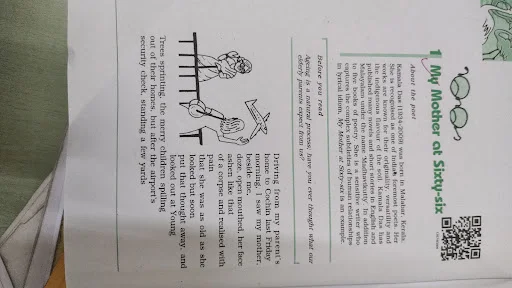
"My Mother at Sixty-Six" by Kamala Das is a poignant exploration of aging, filial love, and the inevitability of mortality. The poet's vivid imagery captures the vulnerability of her aging mother, juxtaposed against the passing scenery during a car journey. Das skillfully weaves emotions through subtle metaphors and introspective musings, revealing a daughter's internal conflict between the beauty of the world outside and the fragility of her mother within. The poem beautifully navigates the delicate balance between life and death, portraying the universal theme of the child becoming the caregiver. Das' evocative language and emotional depth make this poem a touching reflection on the cycle of life.

**IMPORTANT QUESTIONS **

Analyze the poetic devices used by Kamala Das in "My Mother at 66" and their impact on the overall theme.


ANSWER Kamala Das employs poignant poetic devices in "My Mother at 66" to convey the theme of aging and filial love. Her rich imagery, particularly in describing her mother's greying hair and fragile frame, serves as a powerful metaphor for the passage of time. The enjambment and fluidity of the verses mimic the inevitability of aging, reinforcing the poem's emotional weight. The use of sensory details intensifies the reader's connection with the poet's complex emotions, while the symbolic car journey becomes a metaphor for life's transient nature. Das masterfully combines these devices to evoke a deep sense of empathy and contemplation on the universal theme of mortality.
Explore the symbolism present in the poem and its significance in conveying the poet's emotions.

In "My Mother at 66," Kamala Das employs poignant symbolism to convey profound emotions. The car journey symbolizes life's transient nature, with its inevitable progression and uncertain destination. The "hot, white room" represents the harsh reality of aging, emphasizing vulnerability. The "Oxygen" mask becomes a poignant symbol of life support and the inevitable reliance on external aids. The mother's "ashen, silvery hair" symbolizes the passage of time and the inevitability of aging. These symbols collectively amplify the poet's emotional depth, creating a resonant exploration of the intricate relationship between life, aging, and the poignant realization of a parent's mortality.

Discuss the central theme of aging and filial love as portrayed in the poem.
The central theme of "My Mother at 66" revolves around aging and filial love. Kamala Das vividly portrays the physical and emotional challenges of her mother's advancing age. The depiction of her "ashen, silvery hair" and the fragility conveyed through "a weary, aged softness" captures the inevitable march of time. Filial love is evident in the daughter's contemplation of her mother's vulnerability during a car journey, reflecting on the cyclical nature of life. The poem becomes a poignant exploration of the emotional complexities that arise as one witnesses a beloved parent aging, blending nostalgia, compassion, and a profound sense of mortality.

How does the poet use imagery to depict the journey and the emotions associated with her mother's aging?
In "My Mother at 66," Kamala Das employs vivid imagery to depict the journey and the emotions tied to her mother's aging. The "hot, white room" symbolizes the harsh reality of aging, while the "Oxygen" mask becomes a visual representation of life's fragility. The car journey becomes a metaphorical exploration, mirroring life's transient nature. The "ashen, silvery hair" evokes the passage of time, emphasizing the inevitability of aging. This rich imagery not only paints a poignant picture of physical decline but also intricately weaves emotions of love, concern, and contemplation, creating a profound and relatable portrayal of the complexities of witnessing a parent's aging.
Explain the significance of the title "My Mother at 66" and its connection to the poem's meaning.
The title "My Mother at 66" holds profound significance in Kamala Das's poem, encapsulating the central theme of aging and filial concern. The specific age, "66," signals a critical juncture in a person's life, emphasizing the vulnerability of the mother. It becomes a symbolic marker for the poet's contemplation on mortality and the inevitable passage of time. The title sets the stage for a poignant exploration of the mother-daughter relationship, inviting readers to reflect on the complexities of witnessing a beloved parent age. Through this numerical reference, the poem subtly suggests a universal reflection on the shared human experience of grappling with aging parents.
Elaborate on the poet's feelings and internal conflict as expressed in the poem.
In "My Mother at 66," Kamala Das portrays a complex range of emotions and internal conflicts. The poet grapples with a mix of love, concern, and contemplation as she observes her mother's aging. There's a poignant awareness of mortality, evident in the fragile imagery and the symbolic "Oxygen" mask. The poet's conflicted feelings arise from the disparity between the external world's beauty and her internal turmoil over her mother's vulnerability. The car journey becomes a metaphor for life's transience, intensifying the emotional struggle. Das delicately navigates the tension between the external world's allure and the internal emotional landscape, revealing a nuanced portrayal of filial love and the inevitability of loss.
Compare and contrast the external world described in the poem with the internal world of the poet's emotions.
In "My Mother at 66," Kamala Das skillfully contrasts the external world with the poet's internal emotional landscape. The external world is vividly depicted through the scenic car journey, symbolizing life's transient nature. The "beautiful trees" and "green fields" mirror the world's outward beauty. In contrast, the poet's internal world is marked by a poignant struggle, reflecting on her mother's aging and mortality. The "hot, white room" and the "Oxygen" mask symbolize the internal reality of frailty and vulnerability. This duality creates a powerful contrast between the external allure of the world and the internal turmoil of emotions, highlighting the complex interplay between life's external beauty and the internal emotional complexities.
How does Kamala Das employ tone and mood to convey the message of the poem?
Kamala Das employs a somber and contemplative tone throughout "My Mother at 66" to convey the poem's poignant message. The tone reflects a mixture of love, concern, and introspection as the poet grapples with her mother's aging. The mood oscillates between melancholy and reflective, mirroring the complex emotions associated with witnessing a loved one's vulnerability. The somber tone intensifies during descriptions of the mother's physical decline, while the contemplative mood is evident in the symbolic elements like the car journey. Overall, the tone and mood collaborate to evoke a deep sense of empathy, inviting readers to reflect on the universal themes of aging, filial love, and the transient nature of life.
Discuss the role of the car journey in the poem and its symbolic implications.
The car journey in "My Mother at 66" serves as a powerful metaphor, symbolizing the journey of life and the inevitability of aging. As the poet and her mother embark on this journey, it becomes a symbolic exploration of life's transience. The motion of the car reflects the relentless passage of time, and the changing scenery mirrors the evolving stages of life. The journey becomes a poignant backdrop against which the poet contemplates her mother's aging, adding depth to the reflection on mortality. The car becomes a vessel, transporting both the characters and readers through the emotional landscape of filial love, aging, and the universal human experience.

Explore the universality of the poem's themes and how they resonate with readers.
"My Mother at 66" resonates universally due to its themes of aging, filial love, and the inevitability of mortality. Kamala Das taps into shared human experiences, making the poem relatable to readers of diverse backgrounds. The portrayal of a parent's vulnerability in old age strikes a chord with anyone who has witnessed or contemplated the aging process. The internal conflict, emotions, and reflections depicted are not culture-specific, making the poem a poignant reflection of the universal human condition. As readers connect with the universal themes, the poem becomes a mirror reflecting their own experiences, fostering empathy and a shared contemplation of the complexities inherent in the cycle of life.

KEEP VISITING THE BLOG FOR UPDATE ON FOLLOWING 

Poetry analysis
Literary critique
Kamala Das poetry
Aging and filial love
Emotional complexities
Life's transience
Mortality reflection
Universal themes
Symbolism in poetry
Mother-daughter relationship
Kamala Das aged mother
Layers in My Mother at 66
Poetic examination
Kamala Das symbolic poetry
Emotional intricacies in poems
Profound poetry analysis
Aging in literature
Nostalgic poetry reflection
Introspective literary critique
Poetry's internal conflicts
Modern poetry analysis
Literary trends 2024
Kamala Das influence
Emotional resonance in literature
Aging in contemporary poetry
Symbolism trend in poems
Critical appreciation blogs
Thought-provoking poetry
Current literary analysis
Evocative poetry trends
Maternal aging in poetry
Daughter's contemplation
Life's transient nature interpretation
Poetic reflections on mortality
Universal human experiences in literature
Emotional nuances in Kamala Das poems
Symbolic elements in literary works
In-depth literary critique
Parental vulnerability themes
Thoughtful exploration of poetic layers

FREQUENTLY ASKED QUESTIONS AND ANSWERS 

Q: What is the central theme of Kamala Das's poem "My Mother at 66"?
A: The central theme revolves around aging and filial love, portraying the poet's contemplation of her mother's vulnerability and the inevitable passage of time.

Q: How does Kamala Das use symbolism in the poem?
A: Das employs symbolism, such as the car journey representing life's transient nature and the "Oxygen" mask symbolizing life support, to add depth and layers to the poem's meaning.

Q: What role does the car journey play in the poem?
A: The car journey serves as a powerful metaphor, symbolizing the journey of life and emphasizing the relentless progression of time.

Q: How does the poet use imagery to depict emotions in the poem?
A: Vivid imagery, like the "hot, white room" and "ashen, silvery hair," paints a poignant picture of the mother's aging, intensifying the emotional depth of the poem.

Q: What is the significance of the title "My Mother at 66"?
A: The title signifies a critical juncture in the mother's life, emphasizing vulnerability and setting the stage for a profound exploration of aging and filial love.

Q: How does the poet's tone contribute to the poem's emotional impact?
A: The somber and contemplative tone intensifies the emotional depth, reflecting a mix of love, concern, and introspection as the poet grapples with her mother's aging.

Q: Why does the analysis consider the poem's universality?
A: The analysis explores how themes of aging, filial love, and mortality make the poem relatable to a broad audience, tapping into shared human experiences.

Q: What are some symbolic elements discussed in the analysis?
A: The "Oxygen" mask, "ashen, silvery hair," and the car journey are symbolic elements discussed, adding layers to the poem's meaning and conveying deeper emotions.

Q: How does Kamala Das make the poem universally resonant?
A: By tapping into shared human experiences and emotions, such as aging and the parent-child relationship, Kamala Das makes the poem relatable and universally resonant.

From Sketch to Shelf: How Tech is Revolutionizing Industrial Design

** From Sketch to Shelf: How Tech is Revolutionizing Industrial Design**


Remember the days of hunched over drafting tables, meticulously shaping blueprints with ink and graphite? Industrial design has come a long way, baby! Today, sleek software and futuristic tools are transforming the design landscape, paving the way for faster, more efficient, and infinitely cooler creations. Buckle up, design enthusiasts, because we're taking a deep dive into the tech revolutionizing your passion!

1. 3D Printing: From Prototype Playground to Production Powerhouse:

Remember carving foam models and crossing your fingers they'd survive the presentation? Say hello to 3D printing, the magical machine that births your digital dreams into tangible prototypes. Not just for tinkering anymore, 3D printing allows for rapid iteration, material exploration, and even small-batch production, all in-house!


2. CAD Takes the Reins: Precision Meets Efficiency:

Computer-aided design (CAD) software isn't just for fancy lines and circles; it's your digital drafting board on steroids. Imagine parametric modeling that adjusts your entire design with one click, intricate assemblies snapping seamlessly into place, and photorealistic renderings that wow clients before the first mold is cast. CAD streamlines workflows, minimizes errors, and unleashes your design potential.


3. VR & AR: Immerse Yourself in the Future:

Step into your creation before it even exists! Virtual and augmented reality are no longer sci-fi fantasies; they're powerful tools for testing ergonomics, showcasing concepts to clients, and collaborating with teams across the globe. Imagine donning a VR headset to fine-tune the feel of a car interior or using AR to overlay your design onto a real-world space. Talk about immersive prototyping!


4. AI & Machine Learning: The Design Brain Trust:


Artificial intelligence isn't here to steal your job; it's here to be your superpowered design buddy. AI algorithms can analyze user data, predict trends, and even generate design variations based on your specifications. Think of it as having a tireless research assistant and brainstorming partner rolled into one, fueling your creativity with data-driven insights.


5. Sustainable Design Gets a Tech Boost:

From bioprinting with fungi-based materials to optimizing production processes for minimal waste, technology is pushing the boundaries of sustainable design. Life cycle analysis software helps you choose eco-friendly materials, while simulation tools ensure your product is built to last, reducing its environmental footprint.


The Future is Now:

This is just the tip of the tech iceberg, with advancements happening faster than you can say "3D-printed ergonomic bicycle helmet." By embracing these tools, industrial designers are not only shaping the future of products, but also building a more sustainable, efficient, and ultimately, beautiful world. So, dust off your digital canvas, embrace the tech revolution, and let's see what innovative wonders we can create together!

COPY THE BLOG LINK ANDKEEP VISITING THE BLOG FOR UPDATE ON FOLLOWING 

From Sketch to Shelf: How Tech is Revolutionizing Industrial Design
Beyond the Blueprint: 5 Cutting-Edge Technologies Transforming Industrial Design
Design Smarter, Not Harder: Optimizing Your Workflow with Industrial Design Tech
Future-Proofing Products: Why Every Industrial Designer Needs These Tech Skills
3D Printing vs. CNC Machining: Choosing the Right Tech for Your Industrial Design Project
Mastering CAD Software: Essential Tools for Every Industrial Designer
Sustainable Design Meets Technology: Eco-Friendly Innovations in Industrial Design
VR & AR in Industrial Design: The Future of Prototyping and Visualization
Boost Your Industrial Design Career: Must-Have Tech Skills for 2024 and Beyond
Design Like a Pro: 5 Tech Hacks to Improve Your Industrial Design Workflow
Land That Dream Job: Building a Killer Industrial Design Portfolio with Technology
From Concept to Market Faster: Streamlining Your Industrial Design Process with Tech

**Industrial design software**

Industrial design software plays a pivotal role in shaping the contemporary manufacturing landscape, revolutionizing the way products are conceived and developed. These advanced tools empower designers to seamlessly translate creative ideas into tangible prototypes, enhancing efficiency and precision in the industrial design process. Integrating features like 3D modeling, simulation, and prototyping, these software solutions enable designers to visualize and iterate designs rapidly, fostering innovation and reducing time-to-market. Additionally, collaborative functionalities facilitate seamless communication between design teams, ensuring a cohesive and streamlined workflow. As technology continues to evolve, industrial design software remains at the forefront, driving the transformation of conceptualization into real-world, market-ready products.

***Product development technology***

##"Revolutionizing Innovation: Embracing Cutting-Edge Product Development Technology"

Unlock unparalleled innovation with state-of-the-art product development technology. Seamlessly integrating advanced tools such as 3D modeling, simulation, and collaborative platforms, this technology accelerates the design-to-market journey. Streamlined workflows and rapid prototyping empower teams to efficiently bring creative concepts to life, reducing timeframes and ensuring precision. Harness the power of product development technology to stay ahead in today's competitive landscape. Elevate your design process, enhance collaboration, and witness accelerated growth. Embrace the future with this transformative technology, where every idea evolves into a market-ready reality. Stay at the forefront of innovation and gain a competitive edge in the dynamic world of product development.
3D modeling tools
Prototyping innovations
CAD/CAM advancements
Smart manufacturing solutions
Design automation
Rapid prototyping trends
Virtual product design
Digital twin technology
Cutting-edge design tools
Niche industrial design trends
Innovative product creation
Futuristic design processes
Lesser-known design software
Unique prototyping techniques
Under-the-radar CAD tools
Emerging manufacturing tech
Specialized product development
Design revolution insights 
Industry 4.0 in design
Augmented reality design
Sustainable product development
Internet of Things (IoT) in industrial design
Generative design
Biometric product innovation
Human-centric design trends
Additive manufacturing in design
Collaborative design tools
Smart materials in industrial design 
Advanced design methodologies
Industrial design evolution
Tech-driven product aesthetics
Integrating software into design
Next-gen prototyping tools
Design thinking in technology
UX/UI in industrial design
Cognitive computing in product creation
Design engineering synergy
Digital fabrication in design

FREQUENTLY ASKED QUESTIONS AND THEIR ANSWERS 

 Here are some frequently asked questions (FAQs) and their corresponding answers  "From Sketch to Shelf: How Tech is Revolutionizing Industrial Design":

*Q1: How has technology transformed the traditional industrial design process?*
A1: Technology has revolutionized industrial design by introducing advanced tools such as 3D modeling, virtual prototyping, and automated design processes. These innovations streamline the workflow, reduce time-to-market, and enhance overall product quality.

*Q2: What role does CAD/CAM play in modern industrial design?*
A2: Computer-Aided Design (CAD) and Computer-Aided Manufacturing (CAM) are integral to modern industrial design. CAD facilitates precise digital modeling, while CAM ensures efficient production through automated machining processes, leading to more accurate and cost-effective manufacturing.

*Q3: Can you explain the concept of generative design?*
A3: Generative design is an innovative approach that uses algorithms to explore numerous design possibilities based on set parameters. It allows for the creation of optimized and efficient product designs by considering various factors like materials, manufacturing methods, and performance requirements.

*Q4: How does Industry 4.0 impact industrial design practices?*
A4: Industry 4.0 integrates digital technologies into manufacturing, leading to a smart and interconnected industrial ecosystem. In industrial design, this translates to real-time collaboration, data-driven decision-making, and the implementation of technologies like IoT, AI, and robotics for enhanced efficiency.

*Q5: Are there any sustainable design practices influenced by technology?*
A5: Absolutely. Technology plays a significant role in promoting sustainable industrial design practices. From eco-friendly materials to energy-efficient manufacturing processes, advancements in technology enable designers to create products with reduced environmental impact.

*Q6: What is the significance of augmented reality in industrial design?*
A6: Augmented reality (AR) is transforming the way designers visualize and interact with their creations. It allows for virtual prototyping, enabling designers to overlay digital models onto the physical world, facilitating better design evaluation and collaboration.

*Q7: How can small businesses leverage digital twin technology in product development?*
A7: Digital twin technology creates virtual replicas of physical products, allowing for comprehensive testing and analysis. Small businesses can use this technology to refine designs, identify potential issues early on, and optimize their products without the need for extensive physical prototypes.

*Q8: What are some lesser-known but impactful design automation tools?*
A8: There are several lesser-known design automation tools that can greatly benefit industrial designers. Some examples include Grasshopper for Rhino, Dynamo for Autodesk products, and TinkerCAD. These tools automate repetitive tasks, speeding up the design process.

*Q9: How is the human-centric design approach influenced by technology?*
A9: Technology enhances the human-centric design approach by enabling designers to gather and analyze user data more effectively. This data-driven approach helps create products that cater to the specific needs, preferences, and experiences of users, ultimately leading to more user-friendly designs.

*Q10: What future trends can we expect in the intersection of technology and industrial design?*
A10: Future trends in technology and industrial design may include advancements in artificial intelligence, the widespread adoption of virtual and augmented reality, increased use of sustainable materials, and a continued focus on user experience through innovative design methodologies. Keeping abreast of these trends will be crucial for designers to stay competitive in the evolving landscape.


Powering the Future: Unleashing the Potential of Renewable Energy for a Sustainable Tomorrow

**Powering the Future: Unleashing the Potential of Renewable Energy for a Sustainable Tomorrow**

The sun casts its golden rays, the wind whispers through turbines, and tides dance with the promise of clean energy. In this age of environmental awakening, the whispers are becoming roars, demanding a shift towards a future powered by the boundless potential of renewable energy. This is not just a technological revolution; it's a societal renaissance, rewriting the narrative of our relationship with the planet.


From Dependence to Empowerment:

 For millennia, we've bowed to the finite whims of fossil fuels, their fumes choking our skies and scars etching the Earth's face. But renewable energy offers liberation. Solar panels transform rooftops into miniature power plants, wind turbines waltz with the currents, and geothermal whispers from the Earth's core fuel our homes and cities. No longer are we chained to diminishing resources; we become stewards, harnessing the sun's kiss, the wind's song, and the Earth's heartbeat to power our progress.

A Symphony of Green Solutions:

 The renewable energy orchestra plays a diverse melody. Solar panels serenade rooftops, while wind turbines hum in harmony with the breeze. Hydropower thunders from cascading waterfalls, and geothermal whispers from deep within the Earth. Biofuels dance with agricultural waste, and ocean energy sways with the tides, each instrument contributing to a cleaner, greener symphony.

Beyond Environmental Eden:

 The transition to renewables is not just about saving polar bears – it's about empowering people. Off-grid communities bathed in solar light, rural villages electrified by wind power, and developing nations embracing clean energy independence – these are the true melodies of progress. Renewable energy promises not just a cleaner planet, but a more equitable future, where access to power fuels education, healthcare, and economic opportunity.

Challenges to Conquer:

 The road to a renewable future is not without its bumps. Storage solutions dance just beyond our grasp, grid integration waltzes a complex tune, and initial costs whisper cautionary notes. Yet, with innovation as our guide and collaboration as our rhythm, we can overcome these challenges. Investment in research, policy innovation, and public-private partnerships can turn these bumps into stepping stones, propelling us towards a cleaner, brighter tomorrow.

Unleashing the Potential

: The potential of renewable energy lies not just in its technology, but in its power to inspire. It's a beacon of hope, a testament to human ingenuity, and a call to action for a generation seeking a sustainable future. Let us rise to this challenge, embrace the potential of renewables, and together, power a future where clean energy fuels not just our cities, but our dreams.

KEEP VISITING THE BLOG FOR UPDATE ON FOLLOWING  

"solar energy solutions"
"wind power investment"
"renewable energy financing"
"green energy grants"
"eco-friendly power technology"
"innovative sustainable energy projects"
"small-scale hydroelectric power"
"underexplored green energy sources"
"local community renewable initiatives"
"off-grid renewable solutions"
"blockchain in renewable energy"
"smart grid innovations"
"carbon-neutral technologies"
"climate-positive energy strategies"
"net-zero emission solutions"

"clean energy advancements"
"environmentally friendly power options"
"renewable technology breakthroughs"
"sustainable power infrastructure"
"green energy innovations for the future"

FREQUENTLY ASKED QUESTIONS AND THEIR ANSWERS 


*Frequently Asked Questions about Powering the Future with Renewable Energy:*

1. *Q: What is renewable energy?*
   - *A:* Renewable energy is derived from sources that are naturally replenished, such as sunlight, wind, rain, tides, and geothermal heat. These sources are sustainable and have a minimal impact on the environment.

2. *Q: How does renewable energy contribute to sustainability?*
   - *A:* Renewable energy helps reduce dependence on fossil fuels, decreases greenhouse gas emissions, and promotes environmental sustainability. It provides a cleaner and more sustainable alternative to conventional energy sources.

3. *Q: What are the key types of renewable energy sources?*
   - *A:* The main types include solar energy, wind power, hydroelectricity, biomass, and geothermal energy. Each source harnesses natural processes to generate clean and sustainable power.

4. *Q: Can renewable energy meet our growing energy needs?*
   - *A:* Yes, renewable energy has the potential to meet a significant portion of our energy demands. Advancements in technology, coupled with increased investments, are making renewable sources more efficient and accessible.

5. *Q: How can individuals contribute to the shift towards renewable energy?*
   - *A:* Individuals can contribute by adopting solar panels, supporting green energy initiatives, conserving energy, and advocating for sustainable practices. Small actions collectively make a substantial impact.

6. *Q: Are there economic benefits to investing in renewable energy?*
   - *A:* Yes, investing in renewable energy can stimulate economic growth by creating jobs, fostering innovation, and reducing long-term energy costs. Governments and businesses worldwide are recognizing the economic potential of the renewable sector.

7. *Q: What challenges does the renewable energy industry face?*
   - *A:* Challenges include intermittency (for solar and wind), initial setup costs, and the need for infrastructure upgrades. Ongoing research and development aim to address these challenges and make renewable energy more widespread.

8. *Q: How is technology influencing the future of renewable energy?*
   - *A:* Technology plays a crucial role in enhancing the efficiency of renewable energy systems. Advances in energy storage, smart grid technology, and digital solutions are driving the evolution of the renewable energy landscape.

9. *Q: Is it possible for a community to be entirely powered by renewable energy?*
   - *A:* Yes, several communities worldwide are transitioning to 100% renewable energy. Through a combination of local initiatives, government support, and technological advancements, communities can achieve energy independence sustainably.

10. *Q: What role does government policy play in promoting renewable energy?*
    - *A:* Government policies, such as subsidies, tax incentives, and renewable energy targets, can significantly influence the adoption of clean energy. Supportive policies create a conducive environment for the growth of the renewable energy sector.


"Custard Apple Delight: Unveiling the Nutritional Wonders and Health Benefits"


*Custard Apple Delight: Unveiling the Nutritional Wonders and Health Benefits*

Move over, boring old apples! There's a new, creamy kid on the block, and it's packed with a punch of deliciousness and nutrition. We're talking about the custard apple, a tropical treat that's not just a taste bud explosion, but a health powerhouse in disguise.

A Feast for the Senses and the Body:


Velvety Delight: Forget crunchy and tart, the custard apple is all about smooth, custard-like flesh that melts in your mouth. Its sweetness dances on your tongue, offering a unique flavor that's a tropical twist on familiar favorites.
Nutritional Powerhouse: Don't be fooled by its sweetness, the custard apple is a treasure trove of essential vitamins and minerals. Vitamin C for immunity, vitamin A for healthy vision, fiber for digestion, and potassium for heart health – it's got it all!
Unveiling the Health Benefits:

Digestive Diva: High in fiber, the custard apple keeps your gut happy and regular. Say goodbye to constipation and hello to a healthy digestive system!
Immunity Booster: Packed with vitamin C, this tropical treat fights off infections and keeps you feeling your best. Whether it's cold season or just a busy week, the custard apple is your natural shield.
Heart Hero: Potassium, a key player in regulating blood pressure, makes the custard apple a friend to your heart. Enjoy it in moderation for a happy and healthy ticker.
Bone Builder: Calcium and phosphorus, essential for strong bones and teeth, are found in abundance in this creamy delight. Snack on a custard apple for a naturally delicious way to support your skeletal health.
Diabetes-Friendly: With a low glycemic index, the custard apple's sugars release slowly, preventing blood sugar spikes. This makes it a smart choice for those watching their blood sugar levels.
Custard Apple Delights: Beyond the Fruit:

The goodness of the custard apple doesn't stop at the fruit itself. Here are some ways to enjoy its benefits:

Smoothie Sensation: Blend it with your favorite fruits and greens for a creamy and nutritious smoothie.
Dessert Dream: Make ice cream, sorbet, or even pies with the custard apple's unique flavor.
Savory Surprise: Add it to salads or chutneys for a touch of sweetness and a boost of vitamins.
So, ditch the boring and embrace the extraordinary! Add the custard apple to your diet and unlock a world of deliciousness and health. Your taste buds and your body will thank you.

 COPY THE BLOG LINK AND KEEP VISITING THE BLOG FOR UPDATE ON FOLLOWING 


"Nutrient-rich fruit"

Ditch the dull and dive into a world of vibrant, nutrient-rich fruits! Bursting with vitamins, minerals, and antioxidants, these natural powerhouses fuel your body and mind. Think sunshine-soaked citrus for vitamin C, brain-boosting berries packed with anthocyanins, or fiber-fantastic apples for gut health. Each bite explodes with flavor, while nourishing your cells and defending against disease. So, skip the sugary snacks and embrace the vibrant world of nutrient-rich fruits – your taste buds and body will thank you!
"Health-conscious superfood"
"Natural dietary supplement"

"Antioxidant-packed custard apple"

Unleash the inner superhero with the custard apple, nature's antioxidant champion! This creamy delight brims with disease-fighting warriors like lutein, vitamin C, and flavonoids, ready to battle free radicals and boost your defenses. Protect your eyes from age-related macular degeneration, keep your heart happy with reduced inflammation, and fuel your immune system with a vitamin C punch. Plus, its fiber kick keeps you feeling full and digestion smooth. Ditch the supplements, embrace the creamy custard apple – a delicious bite against oxidative stress!
"Wellness benefits of custard apple"
"Rare fruit advantages"
"Underappreciated health perks"
"Less known nutrition facts"
"Hidden gem in nutrition"
"Low-key superfruit benefits
"Latest superfood trends"
"Emerging health fads"
"Up-and-coming nutritional discoveries"
"Trending wellness fruits"
"Health buzz around custard apple"
"Annona squamosa benefits"
"Custard apple nutrients"
"Health-boosting qualities"
"Fruit with health advantages"
"Custard apple nutritional content"
"Benefits of incorporating custard apple"
"Antioxidant-rich superfruit"
"Dietary advantages of custard apple"
"Custard apple and well-being"
"Natural health remedies with custard apple" 

FREQUENTLY ASKED QUESTIONS AND THEIR ANSWERS 

*Q: What are the nutritional benefits of custard apple?*
A: Custard apple is a powerhouse of nutrients, including vitamin C, potassium, dietary fiber, and antioxidants. These elements contribute to improved digestion, strengthened immune system, and overall well-being.

*Q: How does custard apple support heart health?*
A: Custard apple contains potassium, which helps regulate blood pressure and reduces the risk of cardiovascular diseases. Additionally, its fiber content aids in maintaining healthy cholesterol levels.

*Q: Can custard apple contribute to weight management?*
A: Yes, custard apple is low in calories and rich in fiber, making it a satisfying and nutritious snack. The fiber content promotes a feeling of fullness, potentially aiding in weight management.

*Q: Are there any specific vitamins in custard apple that benefit skin health?*
A: Absolutely! Custard apple is a good source of vitamin C, which plays a crucial role in collagen production. Collagen is essential for maintaining skin elasticity, reducing wrinkles, and promoting a radiant complexion.

*Q: How can custard apple boost the immune system?*
A: Custard apple's high vitamin C content strengthens the immune system by supporting the production of white blood cells. These cells help defend the body against infections and illnesses.

*Q: Is custard apple suitable for diabetic individuals?*
A: Yes, custard apple has a low glycemic index and can be a part of a diabetic-friendly diet when consumed in moderation. However, it's always advisable for individuals with diabetes to consult their healthcare provider for personalized advice.

*Q: What makes custard apple a great addition to a balanced diet?*
A: Custard apple adds a natural sweetness to your diet without the need for added sugars. Its nutritional profile offers a mix of vitamins, minerals, and antioxidants, contributing to overall health and vitality.

*Q: Can custard apple be included in children's diets?*
A: Yes, custard apple is a kid-friendly fruit that provides essential nutrients for growth and development. Its sweet taste and creamy texture make it an enjoyable and healthy snack for children.

*Q: Are there any precautions or allergies associated with custard apple consumption?*
A: While custard apple is generally safe for most people, individuals with birch pollen allergies may experience cross-reactivity. It's advisable to consult a healthcare professional if you have concerns about potential allergies or interactions.

*Q: How can custard apple be incorporated into daily meals or snacks?*
A: Custard apple can be enjoyed fresh, added to fruit salads, blended into smoothies, or used as a topping for yogurt or oatmeal. Experimenting with different recipes can help incorporate this nutritious fruit into various dishes.

Revolutionizing the Future: Unveiling the Wonders of Industry 4.0

Revolutionizing the Future: Unveiling the Wonders of Industry 4.0


Get ready to dive into the future, where machines talk, factories hum with the symphony of data, and products tailor themselves to your wildest dreams. This isn't science fiction; it's the reality knocking on our doors – Industry 4.0. This fourth industrial revolution, fueled by technological marvels like AI, robotics, and the Internet of Things (IoT), is poised to reshape every facet of our lives, from the way we manufacture to how we consume.

But what exactly makes Industry 4.0 so revolutionary?


1. The Rise of the Smart Factory

 Imagine factories where machines monitor themselves, predict maintenance needs, and optimize production in real-time. Sensors embedded in every bolt and bearing relay data to intelligent systems, orchestrating a dance of robots that assemble products with precision and speed. This hyper-connected ecosystem translates to unprecedented efficiency, reduced waste, and products that adapt to individual preferences.

2. Data Takes the Driver's Seat:

 In Industry 4.0, data isn't just collected; it's the lifeblood of every operation. Advanced analytics algorithms sift through mountains of information, uncovering hidden patterns and trends that guide business decisions, predict market shifts, and personalize customer experiences. Think targeted marketing campaigns, proactive maintenance schedules, and products that learn from your usage and adjust accordingly.


3. The Human-Machine Collaboration

 Contrary to popular fears, Industry 4.0 doesn't aim to replace humans with robots. Instead, it envisions a world where humans and machines work hand-in-hand, leveraging each other's strengths. Humans provide creativity, problem-solving skills, and ethical oversight, while machines handle repetitive tasks, perform complex calculations, and extend human capabilities through augmented reality. This collaboration unlocks possibilities we can only dream of today.

But like any revolution, Industry 4.0 comes with its own set of challenges:

Navigating the skills gap: As jobs evolve, we need to equip our workforce with the skills to thrive in this data-driven landscape.
Addressing security concerns: Protecting sensitive data and ensuring the ethical use of AI are paramount in this hyper-connected world.
Bridging the digital divide: Ensuring equitable access to these technologies is crucial to avoid exacerbating existing inequalities.
The road ahead may be riddled with challenges, but the potential of Industry 4.0 is undeniable. It promises a future of unprecedented productivity, personalized experiences, and sustainable growth. By embracing this revolution and addressing its challenges head-on, we can pave the way for a brighter, more equitable future for all.

KEEP VISTING THE BLOG FOR UPDATE ON FOLLOWING 

"Industry 4.0 solutions cost"
"Smart manufacturing technologies"
"IoT in industrial revolution 4.0"
"Digital transformation in manufacturing"
"Automation trends in Industry 4.0"
"Emerging Industry 4.0 concepts"
"Niche innovations in smart factories"
"Futuristic manufacturing processes"
"Advanced industrial technology insights"
"Cutting-edge production methods"
"Industry 4.0 latest developments"
"Future of smart factories"
"Revolutionary manufacturing technologies"
"Innovations in industrial automation"
"Current trends in digital manufacturing"

"Smart factories and artificial intelligence"
"Connected devices in Industry 4.0"
"Data analytics for smart manufacturing"
"Cyber-physical systems in industry"
"Machine learning applications in production"

FREQUENTLY ASKED QUESTIONS AND THEIR ANSWERS 


*Q1: What is Industry 4.0, and how does it differ from previous industrial revolutions?*
A1: Industry 4.0 is the fourth industrial revolution characterized by the integration of digital technologies, such as IoT, AI, and data analytics, into manufacturing processes. Unlike its predecessors, it emphasizes the connectivity of machines, real-time data exchange, and smart decision-making.

*Q2: What are the key components of Industry 4.0?*
A2: The key components include IoT-enabled devices, cloud computing, artificial intelligence, cyber-physical systems, and advanced data analytics. These elements work together to create a more efficient and interconnected manufacturing environment.

*Q3: How does Industry 4.0 impact traditional manufacturing processes?*
A3: Industry 4.0 transforms traditional manufacturing by introducing automation, predictive maintenance, and data-driven decision-making. This leads to increased efficiency, reduced downtime, and improved overall productivity.

*Q4: What are the benefits of implementing Industry 4.0 in a manufacturing setup?*
A4: The benefits include enhanced productivity, cost savings, improved quality control, better resource utilization, and increased agility in responding to market demands. Industry 4.0 fosters a more competitive and adaptive manufacturing landscape.

*Q5: Are there challenges associated with adopting Industry 4.0?*
A5: Yes, challenges include cybersecurity concerns, workforce skill gaps, initial implementation costs, and the need for a cultural shift within organizations. Overcoming these challenges is crucial for successful Industry 4.0 integration.

*Q6: How does Industry 4.0 contribute to sustainability in manufacturing?*
A6: Industry 4.0 promotes sustainability by optimizing resource usage, reducing waste through predictive maintenance, and enabling more eco-friendly production processes. This aligns with the global push for environmentally responsible practices.

*Q7: Can small and medium-sized enterprises (SMEs) benefit from Industry 4.0?*
A7: Absolutely. While initial investment may be a challenge, SMEs can benefit from increased efficiency, improved competitiveness, and better adaptation to market changes. Various scalable solutions make Industry 4.0 accessible to businesses of all sizes.

*Q8: What role does data play in Industry 4.0, and how is it managed securely?*
A8: Data is a cornerstone of Industry 4.0, used for real-time analytics and decision-making. Secure data management involves encryption, regular audits, and adherence to cybersecurity best practices to protect sensitive information from potential threats.

*Q9: How can professionals prepare for the changes brought about by Industry 4.0?*
A9: Continuous learning, staying updated on technological advancements, and acquiring skills in areas like data analytics, IoT, and cybersecurity are essential. Industry 4.0 demands a workforce with a versatile skill set to navigate the evolving landscape.

*Q10: What are some real-world examples of successful Industry 4.0 implementations?*
A10: Examples include smart factories using IoT for predictive maintenance, AI-driven quality control, and supply chain optimization. Companies like Siemens, Bosch, and General Electric have showcased successful Industry 4.0 integration in their operations.